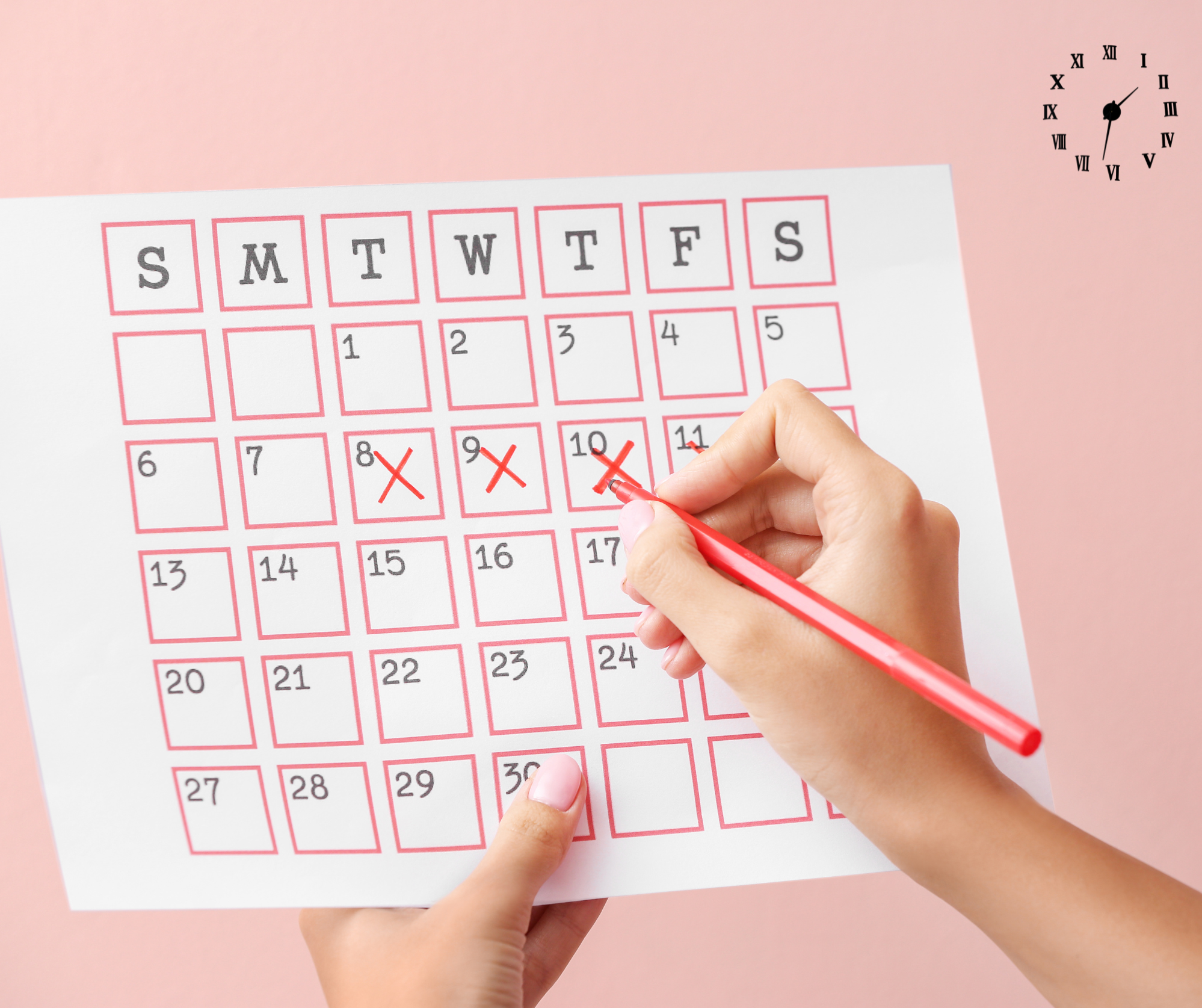
You've had your period like clockwork for decades. Then one month, it arrives five days early. The next month, you wait and wait, counting days with growing anxiety, only to have it show up on day 31. Or perhaps you had what seemed like a normal period, and then ten days later, there's light bleeding again. You find yourself wondering if you're pregnant, if something is wrong, or if this is just what happens when your body starts changing.
Even when you know theoretically that perimenopause brings menstrual changes, living through it feels different. The unpredictability itself becomes the challenge. You can't plan your beach vacation with confidence anymore. You're hesitant about wearing white pants. You keep emergency supplies everywhere, just in case. And beneath it all runs a current of uncertainty, this is normal, or should I be concerned?
If this resonates with you, you're not alone. Millions of women are navigating this same territory, often without the comprehensive understanding they need to feel grounded through the transition.
What Actually Happens to Your Menstrual Cycle During Perimenopause
Perimenopause, the transitional period before menopause, typically begins in your 40s but can start earlier for some women. It lasts anywhere from three to ten years, with four years being average. This phase is characterized by hormonal fluctuations, particularly in estrogen and progesterone, that create a cascade of changes throughout your body.
Your menstrual cycle, which may have been predictable for decades, becomes increasingly variable. Research from the Study of Women's Health Across the Nation, one of the largest studies tracking this transition, found that early perimenopause begins when there's a persistent difference of seven or more days between consecutive cycle lengths. Late perimenopause is marked by episodes of 60 or more days without a period.
But what does this actually look like in your day-to-day life?
In the beginning, the changes are often subtle. Your cycles might become slightly shorter, maybe 24 to 26 days instead of your usual 28. The number of bleeding days might change, you could bleed for three days instead of five, or perhaps seven days instead of four. Flow patterns shift too; some women experience heavier bleeding, while others find their periods becoming lighter.
As perimenopause progresses, the variations become more dramatic. You might skip a period entirely, then have two periods close together. Some women experience what researchers call "loop cycles," where one cycle follows almost immediately after another. You might have bleeding that seems like a normal period, then experience light bleeding again two weeks later, followed by six weeks of nothing.
The unpredictability itself creates psychological stress. You might find yourself constantly wondering, "Will my period start today?" or "Why hasn't it come yet?" This mental load, the inability to plan and predict as you once could, adds an emotional dimension to the physical changes.
The Science Behind the Chaos: Understanding Hormonal Fluctuations
To understand what's happening, we need to look at the hormonal changes driving these menstrual variations. During your reproductive years, your ovaries contain a large reserve of follicles, the structures that house and release eggs. As you age, this reserve naturally diminishes.
As the follicle pool decreases, your brain's pituitary gland responds by producing more follicle-stimulating hormone, trying to coax your ovaries into ovulating. This increased FSH causes follicles to develop more rapidly, shortening your follicular phase (the time from the start of your period to ovulation). Follicles grow faster and may ovulate at a smaller size than they did in your younger years.
Interestingly, follicle growth can begin during the luteal phase of the previous cycle, before you've even gotten your period. This creates cycles where ovulations follow rapidly upon one another with minimal time between them. Hormone patterns during these cycles differ from what you experienced in your younger years, with lower progesterone levels and erratic estrogen patterns.
Not all cycles are ovulatory during perimenopause. Research shows that approximately 20% of cycles in early perimenopausal women are anovulatory, meaning no egg is released. Short cycle intervals, fewer than 21 days, are particularly associated with anovulation and occur in about 44% of these short cycles.
When you don't ovulate, progesterone levels remain low because progesterone is primarily produced by the corpus luteum after ovulation. Without the balancing effect of progesterone, estrogen's effects can become more pronounced, potentially leading to heavier or longer bleeding episodes. Conversely, some anovulatory cycles occur with relatively low estrogen levels, which can result in lighter bleeding or spotting.
The bleeding patterns you experience reflect these hormonal fluctuations. Heavy bleeding episodes are often associated with ovulatory cycles that have high estrogen levels. Light spotting or breakthrough bleeding typically occurs during anovulatory cycles with hormonal imbalance. The unpredictable timing of periods reflects the irregular maturation and release, or non-release, of eggs from your ovaries.
What's Normal and What's Not: When to See Your Doctor
One of the most anxiety-provoking aspects of perimenopausal menstrual changes is knowing when variation is normal and when it warrants medical attention. The range of "normal" is genuinely wide during this transition, but there are important red flags to watch for.
Normal variations during perimenopause include cycles that are shorter or longer than usual (as short as 21 days or as long as 60 days), periods that are heavier or lighter than you're accustomed to, occasional skipped periods, and spotting between periods. You might experience all of these at different times.
However, you should definitely contact your healthcare provider if you experience any of these concerning patterns: bleeding that soaks through one or more pads or tampons every hour for several hours, periods that last longer than seven days consistently, bleeding or spotting between periods that happens frequently, bleeding after intercourse, any bleeding after 12 months of no periods (which signals post-menopausal bleeding and always requires evaluation), passing large blood clots, or feeling dizzy, lightheaded, or experiencing significant fatigue that might indicate anemia.
It's also important to remember that while menstrual irregularity is common in perimenopause, it can also be caused by other conditions. Conditions like thyroid disorders, uterine fibroids, polyps, endometrial hyperplasia, and, though rare, endometrial cancer can all present with abnormal bleeding. This is why evaluation by a healthcare provider is important when you're experiencing new or concerning patterns.
Many women don't seek medical attention because they assume irregular bleeding is "just perimenopause" or because they feel their symptoms aren't serious enough. Others worry they won't be heard or taken seriously. But changes in bleeding, especially heavy bleeding, can lead to anemia and significantly impact your quality of life. A healthcare provider can help distinguish between normal perimenopausal changes and conditions that require treatment.
The Traditional Chinese Medicine Perspective: Kidney Essence and the Transition
In Traditional Chinese Medicine, perimenopause is understood through the lens of declining Kidney essence, or Jing, which governs reproduction, growth, and aging. The Kidney system in TCM is not just the physical organ but a functional system responsible for fertility, vitality, temperature regulation, and fluid balance.
According to TCM, a woman's life unfolds in seven-year cycles tied to the concept of "Tiangui" or "heavenly essence." By the seventh cycle, around age 49, Kidney function naturally begins to decline. This doesn't mean something is wrong; rather, it's viewed as a natural transition that requires support and rebalancing.
During perimenopause, women experience a gradual reduction in Kidney Qi, essence, and blood. This leads to an imbalance between Qi and blood and a disharmony between Kidney Yin and Kidney Yang, the complementary cooling-moistening and warming-activating aspects of the Kidney system. This imbalance affects other organs, particularly the Liver, Heart, and Spleen, creating the constellation of symptoms we associate with perimenopause.
Most perimenopausal symptoms in TCM are attributed to Kidney Yin deficiency. Kidney Yin represents the body's cooling, nourishing, and moistening functions. As Yin declines more rapidly than Yang, you experience what TCM calls "relative Yang excess." This manifests as hot flashes, night sweats, vaginal dryness, dry skin, afternoon heat sensations, insomnia, and, importantly for our discussion, irregular menstruation.
Menstrual cycle changes in TCM reflect this Kidney Yin deficiency. Symptoms include irregular periods, cycles that are shorter than normal (less than 25 days), fluctuations in menstrual blood flow from light to heavy, dizziness, ringing in the ears, soreness in the lower back and knees, heat sensations in the palms and soles of the feet, and constipation.
Some women, particularly those with constitutions leaning toward coldness or those who have experienced prolonged illness, may develop Kidney Yang deficiency instead or in addition to Yin deficiency. Yang deficiency symptoms include irregular periods with heavier flow or spotting throughout the cycle, cold limbs and lower back, decreased libido, frequent urination especially at night, and fatigue.
Clinically, most women develop a combination of both Kidney Yin and Yang deficiency as perimenopause progresses. The Kidney also interacts with other organ systems. When Kidney Yin fails to nourish the Liver, Liver Yang can become hyperactive, leading to irritability, headaches, blurred vision, and mood swings. When the Heart-Kidney relationship is disturbed, you might experience palpitations, disturbed sleep with excessive dreams, anxiety, poor memory, and restlessness.
The Liver's role is particularly important in menstrual regulation and emotional balance. In TCM, the Liver controls the smooth flow of blood and Qi and governs emotional well-being. Chronic stress and unexpressed anger can deplete Liver Qi, exacerbating perimenopausal symptoms. The emotional component, irritability, mood swings, and emotional instability, is understood as Liver Qi stagnation combined with Kidney deficiency.
The Ayurvedic Understanding: Transitioning from Pitta to Vata
Ayurveda offers another rich framework for understanding perimenopause, viewing it as a natural life stage transition from the Pitta phase to the Vata phase of life. According to Ayurveda, human life unfolds in three broad stages: childhood governed by Kapha dosha (earth and water elements), adulthood governed by Pitta dosha (fire and water elements), and elderhood governed by Vata dosha (air and ether elements).
Perimenopause marks the transition from Pitta dominance to Vata dominance. While you may still menstruate, the winds of Vata are rising, bringing qualities of lightness, dryness, irregularity, and changeability. This transition explains why so many perimenopausal symptoms reflect Vata imbalance: anxiety, insomnia, dry skin, joint pain, irregular periods, and that feeling of being scattered or ungrounded.
During perimenopause, estrogen levels surge and fluctuate erratically before ultimately declining. These hormonal changes disrupt the bioenergetic field as your body seeks new equilibrium. In Ayurveda, menstruation itself is governed by Vata, specifically by Apana Vayu, the downward-moving aspect of Vata responsible for elimination, menstruation, and childbirth.
A normal menstrual cycle according to Ayurvedic texts lasts 25 to 30 days, with bleeding that is free from pain and doesn't stain clothing. A normal quantity of blood is approximately four ounces, and a normal period lasts three to seven days. When you read this description, you might realize how far most modern women's experiences are from this ideal, often long before perimenopause begins.
Menstrual difficulties can manifest as Vata, Pitta, or Kapha imbalances, regardless of your underlying constitution. Vata-type menstrual disturbances include pain before menstruation in the lower abdomen and lower back, bloating, constipation, cramps, insomnia, anxiety, cycles that come early or late unpredictably, and scanty or irregular flow.
Pitta-type menstrual difficulties include tender breasts, heavy flow with burning sensations, bright red blood, acne flare-ups, hot flashes, irritability, and frustration. More established Pitta disorders can include endometriosis.
Kapha-type dysmenorrhea manifests as congestion, pain later in the menstrual period, bloating, water retention, feelings of lethargy and heaviness, and in more advanced cases, growths, cysts, or fibrotic changes in the reproductive system.
During perimenopause, many women experience a combination of dosha imbalances. Your specific experience depends on your individual constitution (Prakriti) and current state of imbalance (Vikriti). Those with more earth and water in their constitution, Kapha types, may weather perimenopause more smoothly but tend to experience more weight gain and metabolic changes. Pitta types often experience more hot flashes and irritability. Vata types may feel more unstable, anxious, and depleted, fluctuating between hot and cold.
The goal in Ayurveda is to establish balance between Vata and Pitta doshas during perimenopause, improve digestive fire (Agni), and eliminate toxins (Ama) from the body. This preparation ideally begins years before menstrual changes become pronounced.
Food as Medicine: Nourishing Your Body Through the Transition
What you eat during perimenopause can significantly influence your symptom experience, especially regarding menstrual cycle regulation and overall well-being. Both traditional systems and modern nutrition science offer guidance.
From a modern nutrition perspective, several dietary strategies support hormonal balance during perimenopause. Consuming adequate protein, at least 25 to 30 grams per meal, supports muscle maintenance, stable blood sugar, and hormone production. Protein becomes increasingly important as estrogen decline affects muscle mass and metabolic rate.
Foods rich in phytoestrogens, plant compounds with mild estrogenic effects, can help buffer hormonal fluctuations. These include flaxseeds (which should be ground for better absorption), sesame seeds, soy products like edamame and tempeh, legumes such as lentils and chickpeas, and whole grains. While phytoestrogens are much weaker than your body's own estrogen, they may provide gentle support during this transition.
Calcium and vitamin D are crucial for bone health as estrogen decline accelerates bone loss. Aim for 1,000 to 1,200 mg of calcium daily from sources like leafy greens, dairy or fortified non-dairy alternatives, sardines with bones, and almonds. Vitamin D, ideally 1,000 IU daily, supports calcium absorption and mood.
Omega-3 fatty acids from fatty fish like salmon, sardines, and mackerel, as well as walnuts and chia seeds, have anti-inflammatory properties and may help with mood and brain fog. Reducing inflammatory foods, particularly refined sugars, excessive caffeine, and alcohol, can help minimize hot flashes and stabilize energy and mood.
Complex carbohydrates from vegetables, whole grains, and legumes support serotonin production and help regulate blood sugar, which becomes more challenging as estrogen declines. Don't fall into the trap of severely restricting carbohydrates; your body and brain need them, especially during this transition.
Hydration is essential, particularly if you're experiencing night sweats or heavy periods. Aim for at least eight glasses of water daily.
From the TCM perspective, dietary recommendations focus on nourishing Kidney Yin and building blood. Foods that support Kidney Yin include black sesame seeds, walnuts, goji berries (wolfberries), mulberries, black beans and black soybeans, seaweed and sea vegetables, yams, oysters, sea cucumber, bone broths, egg yolks, and root vegetables.
TCM emphasizes eating foods that are warm or at room temperature rather than cold or icy, as cold foods can impair digestive function and deplete Yang energy. Cooking methods like steaming, braising, and slow-cooking are preferred. Soups and broths are particularly valued for their nourishing and easily digestible qualities.
A traditional TCM congee recipe for perimenopause includes organic oats, goji berries, ground walnuts, maca powder, cacao, jujube dates, ground Dang Gui (Angelica sinensis), and flaxseeds. This combination nourishes Kidney Yin and Yang, supports Qi and blood, and can help with symptoms like insomnia and hot flashes.
Ayurvedic dietary recommendations focus on balancing Vata and Pitta doshas. To balance Vata during perimenopause, favor warm, cooked, and spiced meals eaten at regular times, include healthy fats like ghee, olive oil, and sesame oil which lubricate tissues and calm Vata, choose grounding root vegetables, cooked whole grains like rice and oats, and warming spices such as ginger, cinnamon, and cumin. Avoid raw, cold, and dry foods which aggravate Vata.
To balance Pitta, consume cooling and soothing foods like cucumber, coconut, mint, and cilantro, choose sweet, bitter, and astringent tastes, include juicy fruits like pears, melons, and grapes, and reduce hot, spicy, sour, and salty foods. Limit caffeine and alcohol which increase Pitta heat.
A balancing breakfast for perimenopause from an Ayurvedic perspective includes cooked apples with prunes and figs, which balance both doshas and support digestion and elimination.
Specific Ayurvedic herbs recommended for perimenopause include Shatavari, which supports estrogen and is cooling (helpful for hot flashes), Ashwagandha for building strength, improving sleep, and managing stress, and cardamom and garlic for balancing Vata and supporting metabolism.
Both systems emphasize eating fresh, whole foods prepared simply rather than packaged, processed, or leftover foods. They recognize that digestion itself can become more delicate during this transition, making food quality and preparation methods increasingly important.
Movement and Exercise: Finding What Serves Your Changing Body
Exercise during perimenopause is a powerful tool for managing symptoms, maintaining bone and muscle health, supporting mood, and easing the transition. However, the exercise that served you in your 20s and 30s may need to evolve.
Research clearly shows that strength training becomes particularly important during perimenopause and beyond. As estrogen levels decline, you lose muscle mass more rapidly, your metabolism slows, and bone density decreases. Strength training helps counteract all of these effects by building and preserving lean muscle, maintaining bone mineral density, regulating blood sugar, and supporting metabolic health.
The American College of Sports Medicine recommends full-body resistance training at least two to three times per week. Include eight to ten multi-joint exercises (like squats, deadlifts, lunges, push-ups, and rows) that challenge you while maintaining proper form. To gain maximum benefit, lift weights heavy enough that your final repetition is challenging to complete.
You can start with bodyweight exercises if you're new to strength training, then progress to resistance bands, dumbbells, or barbells. The key is progressive overload, gradually increasing the challenge to your muscles over time. If you're unsure about form or programming, working with a qualified trainer, especially one familiar with training perimenopausal women, can be invaluable.
High-intensity interval training has also been shown to be beneficial during perimenopause, but with some important caveats. A meta-analysis of 38 studies found that HIIT supports fat loss in both normal weight and overweight women, with greater benefits seen in perimenopause compared to post-menopause. HIIT was particularly effective for reducing visceral fat in overweight women and appears to boost metabolism, support cardiovascular health, and help maintain lean muscle.
However, the research also suggests that cycling-based HIIT may be more tolerable than running-based HIIT for many women. Start with short sessions, five to ten minutes, and aim for two to three sessions per week. If you're someone who has historically pushed through high-intensity workouts frequently, you may actually need to reduce frequency during perimenopause.
This is important: your body needs more recovery time during this transition. Exercise creates beneficial stress that prompts your body to adapt, but only if you're adequately recovering. Without sufficient rest, you may be breaking down muscle without rebuilding it, leaving you weaker and more fatigued rather than stronger.
Make your hard days truly hard (with proper intensity and challenge), and make your easy days truly easy (walking, gentle yoga, mobility work). Avoid spending too much time in "no man's land," where you're pushing moderately hard but not hard enough to trigger adaptation. This middle-ground training can leave you chronically fatigued without the benefits you're seeking.
Cardiovascular exercise remains important for heart health, weight management, and overall well-being. Aim for at least 150 minutes of moderate-intensity cardio per week. This could include brisk walking, cycling, swimming, or dancing. Walking is particularly accessible and can be easily incorporated into your daily routine without special equipment.
Flexibility and balance work become increasingly important as you age. Collagen and elastin decline over time, and you may notice increased stiffness. Yoga, Pilates, tai chi, and dedicated stretching sessions can improve flexibility, balance, and core strength while also calming your nervous system.
Research shows that yoga can be particularly beneficial for perimenopausal women, helping to stimulate hormone-regulating glands, reduce stress, improve sleep, and ease hot flashes. Gentle practices like Yin yoga, Restorative yoga, or cooling pranayama (breathing exercises) can be especially soothing. Avoid overly heating practices like Hot Yoga or intense Vinyasa flows, which can aggravate Pitta and increase Vata.
From a TCM perspective, exercise should support rather than deplete your Kidney essence. Gentle, flowing practices like Qigong and Tai Chi are particularly recommended as they cultivate Qi, promote circulation, and calm the mind without over-exhausting the body. These practices work with the body's energy meridians and can help balance Yin and Yang.
Ayurveda recommends adjusting exercise intensity based on your dosha and symptoms. If you're experiencing significant Vata symptoms (anxiety, insomnia, feeling scattered), favor slow, strengthening, and grounding exercises over high-intensity work. If Pitta symptoms dominate (hot flashes, irritability), choose cooling activities like swimming, avoid exercising in the heat of the day, and practice cooling breathing exercises.
High-intensity workouts can increase cortisol, the stress hormone, which is already often elevated during perimenopause. This can exacerbate hormonal imbalance, weight gain, and sleep disturbances. If you love intense exercise, limit it to once or twice a week and prioritize recovery.
Listen to your body and adjust your routine based on how you feel. On days when you're exhausted from poor sleep, a gentle walk or restorative yoga session may serve you better than pushing through a hard workout. Building in at least one complete rest day per week is essential.
The most important thing is consistency and enjoyment. Choose activities you actually enjoy and can sustain over time. Moving your body regularly, even in gentle ways, will serve you far better than sporadic intense workouts that leave you depleted.
The Emotional Landscape: Understanding and Communicating What You're Experiencing
While we've focused primarily on physical menstrual changes, the emotional and psychological dimensions of perimenopause are equally significant and deserve attention. The hormonal fluctuations that create menstrual irregularity also profoundly affect your mood, cognition, and emotional regulation.
Estrogen plays a crucial role in regulating serotonin and dopamine, neurotransmitters that support mood and emotional balance. As estrogen fluctuates erratically during perimenopause, so too can your emotional state. Progesterone, which helps produce GABA, the brain's primary calming neurotransmitter, also declines, reducing your nervous system's natural ability to relax.
Many women report increased irritability, feeling like they have a shorter fuse than they once did. Things that used to roll off your back now feel more provocative. You might find yourself snapping at your partner or children over minor annoyances, then feeling guilty afterward. Some describe it as "perimenopause rage," intense anger that feels disproportionate to the trigger.
Mood swings can be dramatic. You might feel tearful one moment and fine the next, angry then suddenly sad, or experience emotional intensity that feels foreign to your usual temperament. These shifts can occur without clear external triggers, making them particularly confusing and sometimes frightening.
Anxiety often increases during perimenopause, even in women who have never struggled with it before. You might experience generalized worry, rumination, racing thoughts, or a sense of dread. Some women have panic attacks for the first time. Sleep disruption from night sweats compounds anxiety, creating a difficult cycle.
Depression is significantly more common during the perimenopausal window than before or after it. Research shows that women in perimenopause are at increased risk for first-onset depression, even without a prior history. The risk is particularly elevated for those with longer transitions, sleep disturbances, significant vasomotor symptoms, or high stress levels.
Brain fog and cognitive changes are also common. You might experience difficulty concentrating, memory lapses, trouble finding words, or slower processing speed. While concerning, these changes are typically temporary and improve post-menopause for most women.
All of these emotional and cognitive shifts occur during a life stage that is already often challenging. Many women in their 40s and 50s are juggling multiple demanding roles: caring for aging parents, supporting adolescent or young adult children, advancing in their careers or managing job transitions, and navigating evolving relationships. The sandwich generation pressure is real, and perimenopause adds another layer of complexity.
Changes in your sense of self and identity can be profound. If you take pride in being calm and steady, experiencing irritability and mood swings can feel disorienting. If you value your sharp mind, brain fog can be distressing. If you haven't completed your family, irregular periods might trigger grief. These identity questions can lead to existential reflection about aging, purpose, and the next chapter of life.
Understanding that these emotional changes have a biological basis is the first step toward managing them with compassion rather than shame. You're not weak, crazy, or failing. Your brain is adapting to a significant shift in its hormonal environment, and that takes time.
Communicating about these changes with the people in your life is essential, though it can feel vulnerable. Here are some strategies:
With your partner, open communication is critical even when it's difficult. Choose a calm moment, not during conflict, to explain what you're experiencing physically and emotionally. Help them understand that hormonal changes are affecting your mood, energy, and possibly your libido, and that this is a biological transition, not a reflection of your feelings about them.
Be specific about what would help. Maybe you need them to take on more household tasks, agree to a cooler bedroom temperature, be patient when you're irritable, or simply offer empathy without trying to fix things. Let them know that you may need more support right now and that this is temporary.
Encourage your partner to learn about perimenopause. When they understand what's happening in your body, they're better equipped to support you. Sharing educational resources can help them feel less mystified by changes they might not understand.
With your children, the approach depends on their age. Adolescents and young adults can generally understand that you're going through a significant biological change similar to the puberty they've experienced or are experiencing. Explain that you might be more tired, more emotional, or need more space sometimes, and that it's not their fault.
Involving your partner or older children in the conversation can help them feel included rather than confused by changes in your behavior. It normalizes the process and teaches them about an important life stage.
At work, you may not want to share details about perimenopause, and that's completely understandable. However, if symptoms are affecting your performance, it might be worth having a confidential conversation with a trusted supervisor or HR representative, particularly if you need accommodations like a cooler workspace, flexible scheduling, or understanding about occasional brain fog.
Some women find that connecting with colleagues going through similar experiences creates valuable support. Others prefer to keep this part of their life private. Honor what feels right for you.
For yourself, practice self-compassion and recognize that you're navigating a significant life transition. This isn't easy, and being kind to yourself matters. When you feel yourself being harsh or critical about mood swings, irritability, or forgetfulness, try to respond with the same understanding you'd offer a dear friend.
Acknowledge your feelings without judgment. It's okay to be frustrated, sad, angry, or overwhelmed. These feelings are valid and temporary. Creating space for self-care, whether through meditation, time in nature, creative expression, or simply rest, can help you navigate the emotional intensity.
Connecting with other women going through this transition can be enormously validating. Whether through online communities, local support groups, or simply talking with friends, knowing you're not alone in this experience can reduce the sense of isolation.
If emotional symptoms are significantly interfering with your life, relationships, or work, seeking professional support is important and not a sign of weakness. A therapist who specializes in women's health or perimenopause can provide targeted support. For some women, hormone replacement therapy, antidepressants, or a combination of approaches may be helpful. There's no shame in needing additional support during this transition.
Remember that perimenopausal mood changes typically improve after menopause when hormones stabilize at their new lower levels. This difficult period is temporary.
When Uncertainty Becomes the New Normal: The Psychology of Menstrual Unpredictability
Beyond the physical symptoms and emotional changes, there's a psychological dimension to perimenopausal menstrual irregularity that deserves attention: the stress of unpredictability itself.
For most of your adult life, your menstrual cycle provided structure and predictability. Even if you had PMS or painful periods, you knew roughly when to expect them. You planned your life around this rhythm, vacations, important meetings, athletic events, intimate moments.
When that predictability vanishes, it creates a persistent low-level anxiety. You find yourself constantly wondering: Will my period start today? Should I wear protection just in case? Can I wear these white pants? Should I pack extra supplies for this trip? When you're late, you might worry about pregnancy (if that's possible) or wonder what's wrong. When it comes early, you feel caught off guard.
This mental load, the constant calculation and contingency planning, is exhausting. You can't plan your days the way you once could. The spontaneity gets lost. And even though you know intellectually that irregular periods are normal in perimenopause, the emotional experience of that irregularity is harder to adjust to than you might expect.
When you miss a period entirely, you might find yourself counting days. "Day 30...Day 35...Day 40..." The anticipation builds. You check every time you use the bathroom. The uncertainty can be more stressful than the period itself would be.
When you experience bleeding that doesn't fit expected patterns, light bleeding ten days after a period, spotting that continues for weeks, flow that seems too heavy, you worry. Is this still normal perimenopause, or should I call my doctor? This question loops in your mind, adding to the uncertainty.
You might go to your doctor seeking answers and find that even they're uncertain. Not all healthcare providers are well-versed in the normal range of perimenopausal bleeding patterns. You might undergo tests and evaluations that, while sometimes necessary, add to your anxiety and medical expenses. Or you might be dismissed with "it's just perimenopause" when you genuinely need investigation.
This is why education and normalization are so important. Knowing that many women experience loop cycles, knowing that your cycle can vary from 21 to 60 days, knowing that flow can fluctuate wildly, helps create a framework for understanding your experience. It doesn't make the unpredictability go away, but it does reduce the anxiety around it.
Tracking your cycles, even irregular ones, can be helpful. Apps designed for perimenopause tracking (unlike typical period apps designed for regular cycles) can help you see patterns over time and give you data to share with your healthcare provider if needed. The act of tracking can itself feel empowering, a way of bearing witness to your body's transition rather than feeling victimized by it.
Some women find it helpful to reframe this period as one of learning to be comfortable with uncertainty, a skill that serves you well in many areas of life. Rather than trying to control or predict, you practice being present with what is. This shift isn't always easy, but for some, it becomes an unexpected gift of the perimenopausal passage.
Embracing the Transition: A Holistic Approach
Perimenopause is not a disease to be cured but a natural life transition to be supported. Both ancient wisdom traditions and modern science agree on this fundamental point. The symptoms and challenges you experience during this time are real and deserve attention, but they're also temporary and manageable with the right support.
A holistic approach to perimenopausal menstrual changes includes physical support through nutrition, exercise, and possibly herbs or hormone therapy, emotional support through counseling, community, and self-compassion practices, relational support by communicating with partners, family, and friends, and spiritual support through practices that connect you with meaning and purpose.
Traditional Chinese Medicine reminds us that this transition is an opportunity to slow down, turn inward, and cultivate the wisdom that comes with age. Nourishing your Kidney essence now sets the foundation for health in your elder years. Ayurveda teaches that this shift from Pitta to Vata calls for doing less rather than more, prioritizing being over constant doing, and developing the qualities of groundedness and presence that counter Vata's scattered nature.
Modern medicine offers powerful tools including hormone replacement therapy, which can significantly ease the transition for many women, non-hormonal medications for specific symptoms like hot flashes or mood changes, and comprehensive healthcare that addresses the whole person, not just isolated symptoms.
The key is finding the combination of approaches that works for your unique body, constitution, and life circumstances. What serves your best friend might not serve you. What worked for your mother might not work for you. This is your transition, and you get to navigate it in the way that feels right.
As you move through this time of menstrual unpredictability and change, remember that you're not alone. Millions of women are walking this path with you, each with her own experience but all sharing in this fundamental biological transition. Reach out, ask for support, educate yourself, advocate for your needs, and most of all, be gentle with yourself.
Your body is doing something remarkable. It's orchestrating an immensely complex biological shift, recalibrating systems that have functioned one way for decades to function in a new way. This takes time. It's not always comfortable. But it is natural, and it is temporary.
On the other side of perimenopause lies menopause and the years beyond. Many women report that post-menopausal life brings a freedom, clarity, and sense of self they've never experienced before. The unpredictable periods end. The hormonal fluctuations settle. And a new chapter begins.
For now, wherever you are in this transition, know that your experience is valid. Your menstrual changes, however confusing or frustrating, are part of this natural process. And you have the wisdom of generations of women, ancient healing traditions, and modern science to support you through it.
Trust your body. Listen to its wisdom. Seek support when you need it. And remember that this, too, shall pass. On the other side awaits a new season of life, with its own gifts waiting to unfold.