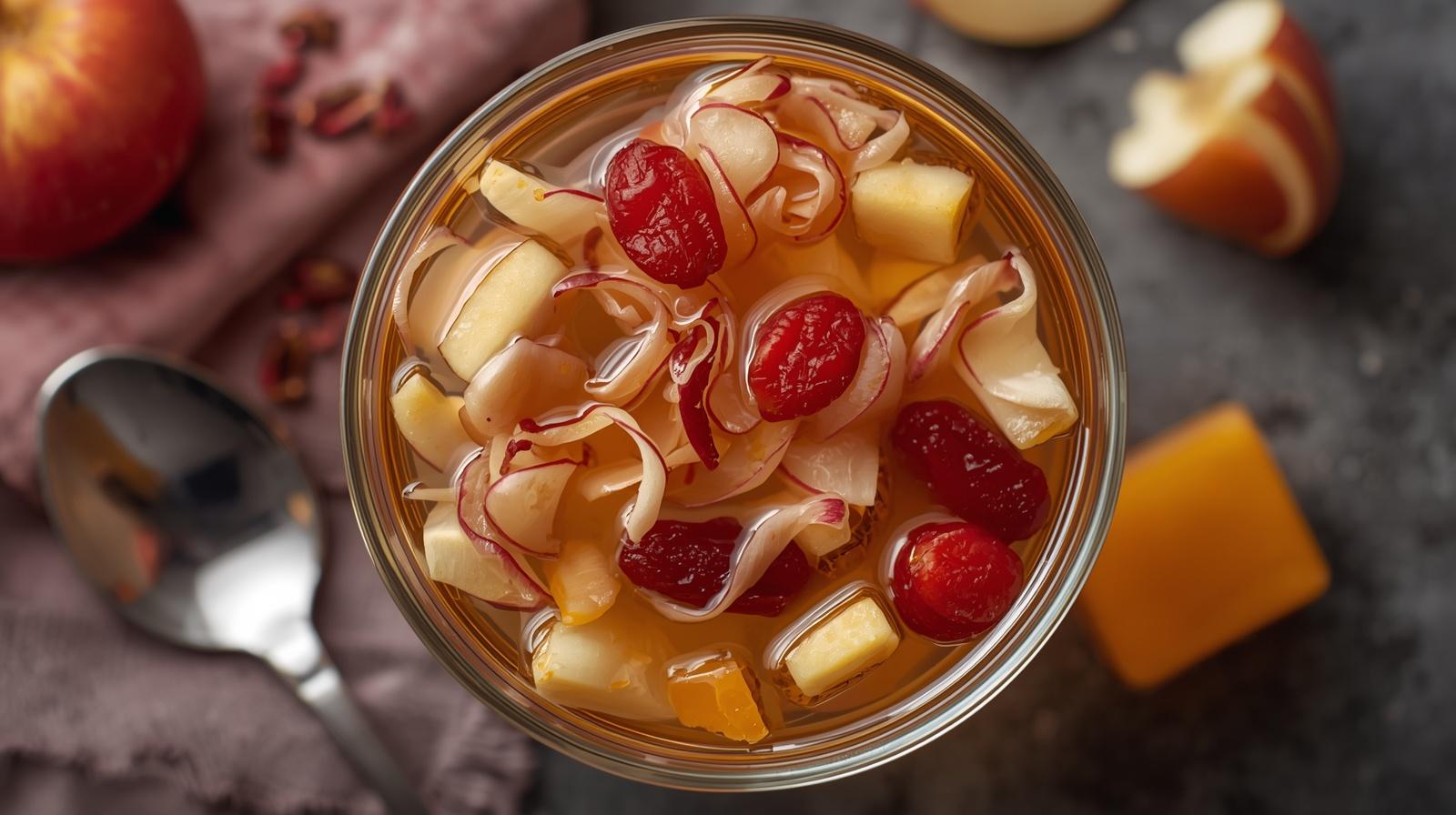
A gentle, nourishing TCM soup that calms the spirit, moistens the lungs, and supports Blood. Naturally balanced, not too sweet, with the bitterness fully cooked out of the lily bulbs. One of the most directly applicable soups in the TCM tradition for the emotional and sleep symptoms of perimenopause.
8 to 10
Up to one week refrigerated; reheat gently and add fresh goji berries to the bowl
Through the day and up to dinner time; particularly good drunk warm before the evening meal
Insomnia, night restlessness, anxiety, emotional sensitivity, Yin deficiency, Heart and Lung nourishment, perimenopause support
What you need
- •1 cup dried lily bulb petals (Bai He), soaked 15 to 20 minutes minimum, up to a few hours
- •9 red dates (jujubes, Da Zao), pitted and cut open
- •1/2 Honeycrisp apple, peeled, cored, and quartered
- •1 small rock of jaggery, or an equivalent amount of rock sugar, or honey added to individual bowls after serving
- •Goji berries: either a generous handful added to the pot in the last 5 minutes of simmering, or 5 to 6 berries placed on top of each bowl when serving. Choose one method.
- •8 cups water
Soaking the lily bulbs
Dried lily bulbs must be soaked before cooking. Place the petals in water for at least 15 to 20 minutes, or up to a few hours if you have time. The soaking rehydrates the petals and begins drawing out their natural bitterness into the water. Discard the soaking water entirely and rinse the petals well before adding to the pot. The longer you soak, the less bitterness remains to cook out during simmering.
Opening the dates
Pit and cut each red date open before adding to the pot. This one step makes a noticeable difference: the opened date releases its full sweetness and active compounds into the broth rather than sitting whole in the water. Do not skip this.
How to make it
- Soak the dried lily bulb petals in cold water for at least 15 to 20 minutes. Drain, discard the soaking water, and rinse well.
- Pit and cut open all 9 red dates. Peel, core, and quarter the apple.
- Add 8 cups of water to a pot with the soaked lily bulbs, red dates, and apple. Bring to a full boil over medium-high heat.
- Once boiling, add the jaggery rock. Reduce to a gentle simmer, cover, and simmer for 30 minutes.
- Taste a lily bulb petal toward the end of simmering. The soup is ready when there is absolutely no bitterness remaining. That is your marker, not the clock. If bitterness remains, continue simmering and taste again.
- If adding goji berries to the pot: stir in a generous handful in the last 5 minutes of simmering. This warms them through and infuses their sweetness into the broth.
- Ladle into bowls. If using the bowl method instead, place 5 to 6 goji berries on top of each serving just before drinking.
The bitterness test
Lily bulbs are ready when you taste a petal and there is zero bitterness. A faint bitterness means more simmering is needed. This step cannot be timed: it depends on how long the bulbs were soaked, how dry they were, and the heat of your simmer. Trust the taste, not the clock.
Goji berries: pot or bowl
Add a generous handful to the pot in the last 5 minutes of simmering, or place 5 to 6 berries on top of each bowl when serving. Not both. The pot method infuses the broth with their sweetness. The bowl method keeps them plump, vibrant, and visually beautiful.
Sweetener options
Jaggery adds a warmer, more mineral sweetness and brings its own mild iron content. Rock sugar is the classical TCM choice: neutral, clean, and gentle. Honey must never be added to a hot pot. Add honey to individual bowls after ladling, once the soup has cooled slightly.
About this recipe
This soup sits at the center of TCM dietary therapy for the perimenopausal transition. Each of its four main ingredients addresses a different aspect of the Yin deficiency and Blood deficiency pattern that TCM recognizes as the root of perimenopause: the insomnia, the night restlessness, the anxiety, the emotional sensitivity, the dryness, the mild palpitations, and the sense of internal heat that cannot be easily cooled.
Lily bulb (Bai He) is the heart of the formula. Classified in TCM as sweet, slightly cold, and entering the Heart and Lung meridians, its primary action is to nourish Heart Yin, clear deficiency heat from the Heart channel, and calm the Shen (spirit). This is precisely the pattern of perimenopause at night: a restlessness, a light-sleeping quality, a mind that will not settle even when the body is tired.
What makes this soup particularly beautiful is its gentleness. It nourishes rather than moves, moistens rather than dries, calms rather than stimulates. It is the kind of soup you make on a quiet evening, drink warm before your meal, and notice over time that you sleep a little more deeply and wake a little less restless.
Why this soup supports you
- •Lily bulb (Bai He) nourishes Heart Yin and calms the Shen, directly addressing the insomnia and night restlessness of perimenopause
- •Lily bulb clears deficiency heat from the Heart channel, reducing the emotional agitation and low-grade anxiety that Yin cannot anchor
- •Red dates nourish Heart Blood, addressing fatigue, palpitations, mood instability, and the Blood deficiency common in perimenopause
- •Red dates tonify the Spleen and support Qi and Blood production, addressing the root of why Blood becomes deficient
- •Goji berries nourish Kidney and Liver Yin, addressing the root deficiency pattern of the perimenopausal transition
- •Goji betaine supports liver methylation and hormone detoxification
- •Apple generates Body Fluids and moistens, addressing the dryness of Yin deficiency across skin, throat, and mucous membranes
- •Apple pectin feeds beneficial gut bacteria supporting the estrobolome and healthy estrogen clearance
- •Jaggery provides mild iron support and the Madhura rasa (sweet taste) that nourishes depleted tissue
- •The whole formula together addresses Heart Yin, Heart Blood, Kidney Yin, and Body Fluids in a single gentle preparation
- •Drunk warm in the evening, the soup supports the transition into rest that perimenopause disrupts
Ingredients and their wisdom
Dried lily bulb (Bai He, 1 cup soaked)
Thermal quality: Slightly cold. Sweet. Enters the Heart and Lung meridians.
Bai He (Lilium brownii or related species) is one of the most important herbs in TCM for the emotional and sleep disturbances of Yin deficiency. Its classical indications include low-grade restlessness after depletion, a mind that cannot settle, light disturbed sleep, mild anxiety without a clear cause, emotional sensitivity, and a faint bitter taste in the mouth on waking. These are precisely the symptoms that perimenopause amplifies as Yin declines.
In Ayurvedic terms, lily bulb maps onto the category of Pitta-reducing, Vata-nourishing, Ojas-building foods. Its calming effect on the mind corresponds to Medhya (mind-nourishing) and Sattvic foods that increase clarity, peace, and stability of mind.
Soaking rehydrates the petals, begins releasing bitterness into the soaking water (which is then discarded), and significantly reduces the cooking time needed to remove all remaining bitterness. Soaking for a few hours is recommended when time allows.
Red dates (Da Zao, 9 pieces)
Thermal quality: Warm. Sweet. Enters the Heart, Spleen, and Stomach meridians.
Red dates (Ziziphus jujuba) are one of the most commonly used herbs in classical TCM formulas. They nourish Heart Blood and calm the Shen, making them the primary food herb for the fatigue, palpitations, mood instability, and disturbed sleep that Blood deficiency produces. They also tonify the Spleen, responsible in TCM for generating Qi and Blood from food.
Red dates provide Vitamin C, potassium, iron, and cyclic AMP. Opening them before cooking releases their full active content into the broth.
Goji berries (Gou Qi Zi)
Thermal quality: Neutral. Sweet. Enters the Liver and Kidney meridians.
Goji berries (Lycium barbarum) are one of the most important Kidney and Liver Yin tonic herbs in classical TCM. Kidney Yin deficiency is the primary TCM pattern underlying perimenopause: the internal heat, night sweats, hot flashes, dryness, disturbed sleep, and restlessness all correspond to depleted Yin unable to anchor Yang. Goji berries replenish Kidney Yin and Essence, nourish Liver Blood, and brighten the eyes.
Goji berries also contain betaine, which supports liver methylation and efficient estrogen metabolite processing, and zeaxanthin at the highest concentration of any food.
Honeycrisp apple (1/2, peeled and quartered)
Thermal quality: Cooling. Sweet and slightly tart. Generates Body Fluids.
Apple in TCM generates Body Fluids, lubricates the Lung, and moistens the intestines. In a soup built around Yin nourishment, apple adds to the moistening action of the lily bulb and goji, contributing sweetness and a gentle tartness that prevents the broth from becoming cloying. Apple pectin also feeds the gut bacteria that activate phytoestrogenic compounds in the diet.
Sweetener: jaggery, rock sugar, or honey
Jaggery adds a warmer, more mineral sweetness with mild iron content. Rock sugar is the classical TCM choice: neutral, clean, and gentle. Honey must never be added to a hot pot; add to individual bowls after ladling.
When to drink it
This soup is best enjoyed through the day and up to dinner time. A bowl before your evening meal is a particularly good practice: it warms and prepares the digestive system, the Shen-calming herbs begin their work while agni is still active, and it takes the edge off hunger so the meal that follows is eaten more calmly.
Because the soup contains apple, Ayurvedic principles advise against drinking it late in the evening or close to bedtime. Fruit requires active digestive fire (agni) to be properly processed. Agni settles as the evening progresses, and fruit taken when agni is low tends to sit undigested.
It is appropriate at any time of day as a restorative. It keeps for up to a week in the refrigerator. Reheat gently, do not boil, and add fresh goji berries to the bowl when serving.
Sources
- •Maciocia G. The Practice of Chinese Medicine. Churchill Livingstone. 2008.
- •Bensky D, Clavey S, Stoger E. Chinese Herbal Medicine: Materia Medica. 3rd ed. Eastland Press. 2004.
- •Amagase H, Farnsworth NR. A review of botanical characteristics, phytochemistry, clinical relevance in efficacy and safety of Lycium barbarum fruit (goji). Food Research International. 2011. doi:10.1016/j.foodres.2011.07.027
- •Frawley D, Lad V. The Yoga of Herbs: An Ayurvedic Guide to Herbal Medicine. Lotus Press. 1986.