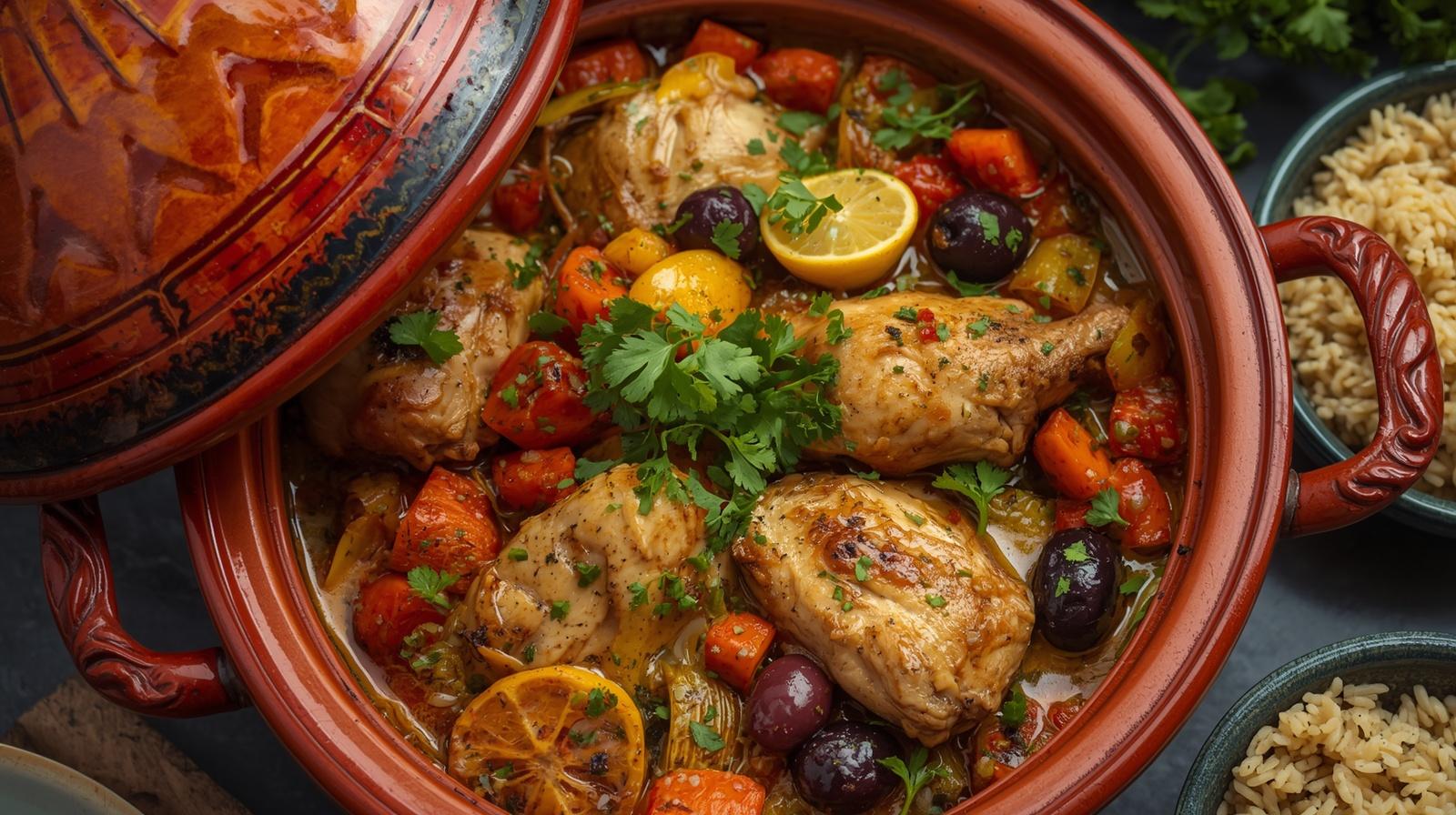
Shared by Youssef Zeroual. Lean protein, a generous pile of vegetables, anti-inflammatory spices, and a restrained hand with the olive oil. A delicious, nutritious Moroccan dish that is also, quietly, one of the best things a perimenopausal woman can eat for dinner.
15 minutes
25 to 35 minutes
3 to 4
Complete protein, anti-inflammatory support, bone health, cardiovascular health, blood sugar stability
A note from Youssef Zeroual
Youssef Zeroual is a Moroccan-born realtor, mentor, and trainer based in Alexandria, Virginia, with over two decades of experience in real estate and an MBA in International Business from George Mason University. He is a very kind and generous person, deeply respected by the people around him. He has been recognized with awards for his commitment to helping others, and it shows in everything he does.
He describes this dish simply and well: lean protein, tons of vegetables, anti-inflammatory spices like ginger and turmeric, and olive oil if you don't go wild like an overexcited chef. The recipe he shared is balanced, practical, and deeply Moroccan, arriving with instructions that include the direction to toss in spices and stir like you know what you're doing. That confidence is part of the recipe.
What you need
Protein and aromatics
- --1 lb chicken breast or thighs, trimmed
- --1 onion, sliced
- --2 garlic cloves, minced
- --1 tablespoon olive oil (do not overdo it)
Vegetables
- --2 carrots, cut into sticks
- --1 zucchini, sliced
- --1 bell pepper (optional but nice)
Spices
- --1 teaspoon turmeric
- --1 teaspoon ginger
- --1 teaspoon paprika
- --1/2 teaspoon cumin
- --Salt and pepper to taste
The Moroccan elements
- --A handful of green olives
- --1/2 preserved lemon (optional but very Moroccan of you)
- --Fresh cilantro and parsley to finish
- --1/2 cup water or low-sodium broth
How to make it
In Youssef's words, exactly as he shared them:
- 1Heat olive oil in a pan or tagine.
- 2Add onions and garlic. Cook until soft.
- 3Add chicken. Brown lightly.
- 4Toss in spices. Stir like you know what you're doing.
- 5Add vegetables, olives, and preserved lemon.
- 6Pour in water or broth. Cover and simmer 25 to 35 minutes.
- 7Finish with fresh herbs.
No tagine pot?
A heavy-bottomed pan with a tight lid works beautifully. The conical tagine lid design traps steam and returns it to the dish, keeping everything tender and moist. A tight-fitting pan lid does the same job.
About this recipe
The tagine is one of the great functional foods of the Mediterranean and North African world. Slow-cooked, spice-rich, built around lean protein and vegetables, with olive oil used as a carrier for flavor rather than a primary ingredient: this is the architecture of a genuinely healthy meal that also happens to be extraordinary to eat.
What makes Youssef's version particularly well-suited for perimenopausal women is the spice combination. Turmeric, ginger, paprika, and cumin are not just flavor additions. They are a concentrated anti-inflammatory payload delivered directly into a complete, protein-rich meal. Each of these spices has documented effects on the inflammatory pathways that underlie perimenopausal symptoms from joint pain to mood disruption. The chicken provides complete protein for muscle preservation as estrogen declines. The carrots and zucchini provide fiber for gut microbiome health and hormone metabolism. The olive oil carries fat-soluble compounds from the spices and vegetables into circulation.
This is a recipe where the cultural wisdom and the nutritional science arrived at the same answer from different directions. Morocco has been building meals around turmeric, ginger, and slow-cooked vegetables for centuries. The research now explains why.
Why this recipe supports you
- ◆Chicken provides complete lean protein, essential for muscle mass preservation as estrogen declines
- ◆Turmeric curcumin reduces NF-kB inflammatory signaling, addressing joint pain, mood disruption, and hot flash severity
- ◆Ginger gingerols work through COX-2 inhibition, a complementary anti-inflammatory pathway to curcumin
- ◆Olive oil enhances curcumin and fat-soluble vitamin absorption from the vegetables
- ◆Carrots and zucchini provide Vitamin A, Vitamin C, potassium, and fiber for gut microbiome and hormone metabolism
- ◆Bell pepper, if included, adds significant Vitamin C which supports collagen synthesis and iron absorption
- ◆Green olives provide healthy monounsaturated fats and polyphenols with cardiovascular benefit
- ◆Preserved lemon provides Vitamin C, limonene, and flavor compounds with liver-supporting properties
- ◆Cumin supports mineral absorption, particularly calcium, from the vegetable components
- ◆The Mediterranean dietary pattern, of which this dish is exemplary, is consistently associated with reduced severity of perimenopausal symptoms in population research
The spices: why each one is here
Turmeric (1 teaspoon)
Turmeric has been central to Moroccan cooking since Arab traders introduced it in the 7th century, and to Ayurvedic and Chinese medicine for thousands of years before that. Its primary active compound, curcumin, inhibits NF-kB, one of the master switches of inflammatory signaling in the body. This pathway is activated by the oxidative stress and hormonal fluctuation of perimenopause and underlies joint pain, mood disruption, brain fog, and hot flash severity. Turmeric cooked in fat has significantly higher bioavailability than turmeric in water: the olive oil in this recipe is the fat that carries it.
Ginger (1 teaspoon)
Ginger's gingerols work through COX-2 inhibition, a different anti-inflammatory pathway from curcumin. Together, turmeric and ginger address inflammation through two complementary mechanisms, making the combination more effective than either alone. In Moroccan cooking, ground ginger is used more commonly than fresh, and it provides a warm, slightly sharp heat that is gentler on the palate than fresh ginger while still delivering its active compounds. For perimenopausal women, ginger's additional benefit is digestive: it improves gastric emptying and nutrient absorption from the entire meal.
Paprika (1 teaspoon)
Moroccan sweet paprika is made from dried sweet red peppers and provides Vitamin C, beta-carotene, and a family of capsaicin-related compounds at levels mild enough to be anti-inflammatory rather than stimulating. It gives the tagine its characteristic warm red-gold color and contributes antioxidant polyphenols that support cardiovascular health. For perimenopausal women whose cardiovascular risk increases as estrogen's protective effect diminishes, the regular inclusion of paprika-rich Mediterranean cooking is a meaningful dietary choice.
Cumin (1/2 teaspoon)
Cumin is the digestive activator of this formula. It improves the secretion of digestive enzymes and bile, enhances mineral absorption from the vegetables, and provides its own modest anti-inflammatory and antioxidant effects through cuminaldehyde and other volatile compounds. In Moroccan cooking, cumin is foundational: it is the earthy, slightly smoky base note that makes the brighter spices cohere into a single flavor identity.
The Moroccan elements
Preserved lemon
Preserved lemon is one of the signature flavor ingredients of Moroccan cuisine. Whole lemons are cured in salt for weeks to months, which transforms their flavor entirely: the sharpness mellows, the bitterness of the pith softens, and what remains is a complex, intensely citrus, slightly fermented, deeply savory flavor that is unlike anything else. Only the rind is typically used in cooking. Nutritionally, preserved lemon provides Vitamin C, limonene (the primary volatile oil of lemon peel, with documented liver-supporting and anti-inflammatory properties), and the probiotic byproducts of the lacto-fermentation process. If you cannot find preserved lemon, a strip of fresh lemon zest and a small squeeze of juice added at the end approximates some of its function.
Green olives
Green olives are harvested before they ripen, giving them a firmer texture and a slightly more bitter, briny flavor than black olives. They are a concentrated source of oleic acid (the primary monounsaturated fat in olive oil) along with oleuropein, the polyphenol responsible for olive's documented cardiovascular and anti-inflammatory effects. Research on the Mediterranean dietary pattern consistently identifies olive consumption alongside olive oil as independently associated with cardiovascular benefit.
Serving suggestions
- ◆Couscous: the traditional Moroccan accompaniment, steamed or prepared with a small amount of olive oil and herbs
- ◆Brown rice: a slightly higher-fiber option that slows glucose absorption and complements the anti-inflammatory spices
- ◆Warm crusty bread for scooping, in the Moroccan tradition
- ◆A simple green salad with lemon and olive oil alongside
- ◆Followed by mint tea, as Moroccan meals traditionally end
Sources and references
Hewlings SJ, Kalman DS. Curcumin: a review of its effects on human health. Foods. 2017.
Daily JW et al. Efficacy of turmeric extracts and curcumin for alleviating the symptoms of joint arthritis: a systematic review and meta-analysis. Journal of Medicinal Food. 2016.
Schwingshackl L, Hoffmann G. Mediterranean dietary pattern, inflammation and endothelial function: a systematic review and meta-analysis. Nutrition, Metabolism and Cardiovascular Diseases. 2014.
Frawley D, Lad V. The Yoga of Herbs: An Ayurvedic Guide to Herbal Medicine. Lotus Press. 1986.
Bloom in the pause.