
Serena Williams built a career defying what the human body was thought to be capable of. Tom Brady played elite professional football until his mid-forties. Both are legends of physical discipline. So when their names appear in GLP-1 drug promotions, it raises a real question.
What are they seeing that we're not?
Or maybe the better question is: what are pharmaceutical companies seeing. And what does that say about the cultural moment we're living in?
GLP-1 receptor agonists like Ozempic and Wegovy have exploded in popularity. They work. They reduce appetite, stabilize blood sugar, and drive weight loss in ways that impress even skeptics. The science is not fiction.
But here's what often gets left out of the conversation.
GLP-1 is not a synthetic invention. It is a hormone your body already makes, every single day, in your gut. The drugs are mimicking something ancient. The question is: why has your body stopped producing enough of it naturally?
And more importantly: can you support it without a prescription?
Ayurveda and Traditional Chinese Medicine have been answering that question for over 3,000 years. They just didn't have the language for GLP-1. Modern science is now catching up.
This blog explores the research, the herbs, the lifestyle strategies, and the deeper philosophy that both traditions share: your body is not broken. It is responding to an environment that needs to change.
---
## First, What Exactly Is GLP-1?
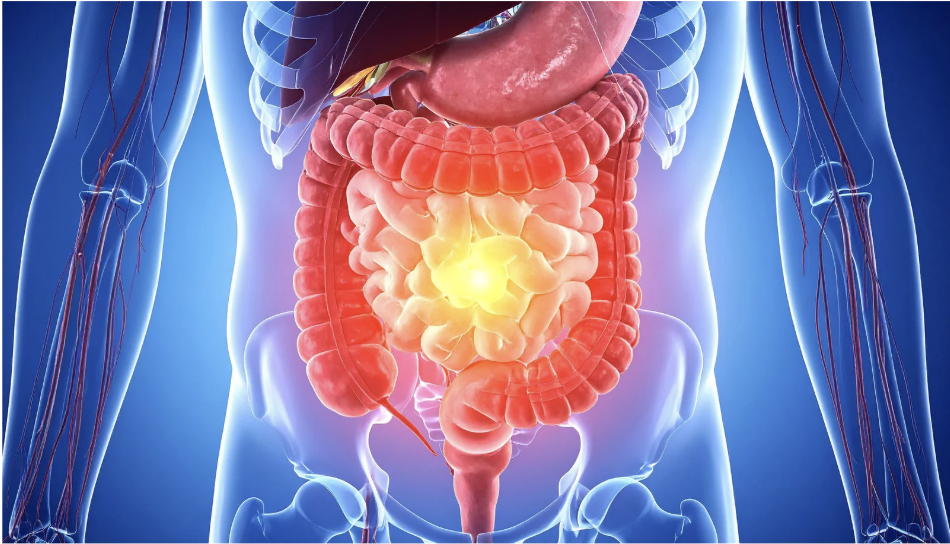
GLP-1 stands for Glucagon-Like Peptide-1. It is a hormone produced naturally in the gut, specifically by L-cells in the small intestine and colon, in response to eating. Once released, it does several powerful things simultaneously:
- Signals the pancreas to release insulin, lowering blood sugar after meals
- Suppresses glucagon, the hormone that tells the liver to release stored glucose
- Slows gastric emptying, so food moves more slowly through the digestive system, creating longer-lasting fullness
- Acts on the brain's appetite centers to reduce hunger and cravings
- Protects pancreatic beta cells from damage over time
Pharmaceutical GLP-1 agonists like semaglutide mimic this hormone but are engineered to stay in the body far longer than natural GLP-1 (which breaks down within minutes). This extended presence is what creates the dramatic appetite suppression people experience.
The tradeoff? Side effects including nausea, constipation, vomiting, potential thyroid tumors in animal studies, and, critically, the likelihood that you will need the drug indefinitely — because stopping it often reverses the benefits without addressing root causes.
This is the question worth sitting with: if GLP-1 is natural, what disrupted the body's ability to produce it?
---
## What Disrupts Natural GLP-1 Production?
Modern life is, in many ways, a perfect storm of GLP-1 suppression. Research has identified several key disruptors:
**Chronic stress:** Elevates cortisol, which directly suppresses GLP-1 production and drives insulin resistance. This creates a cycle of cravings and metabolic dysfunction.
**Sleep deprivation:** Studies show that sleep-deprived individuals experience delayed post-meal GLP-1 release, meaning their fullness signals come late or not at all.
**Poor gut microbiome health:** GLP-1 is produced in gut cells. A dysbiotic gut produces less GLP-1 and responds to it less effectively.
**Ultra-processed, low-fiber diets:** GLP-1 is triggered by specific nutrients, especially proteins and soluble fiber. Diets high in refined carbohydrates and low in fiber provide little stimulation.
**Sedentary lifestyle:** Exercise has been shown to directly stimulate GLP-1 secretion, particularly moderate-to-high intensity movement.
For women in perimenopause, these disruptions intersect with hormonal shifts: declining estrogen, rising cortisol reactivity, disrupted sleep, and altered insulin sensitivity. These create conditions where GLP-1 production is particularly compromised. This is not a personal failure. It is physiology responding to an environment.
---
## What Ayurveda Has Known for 3,000 Years
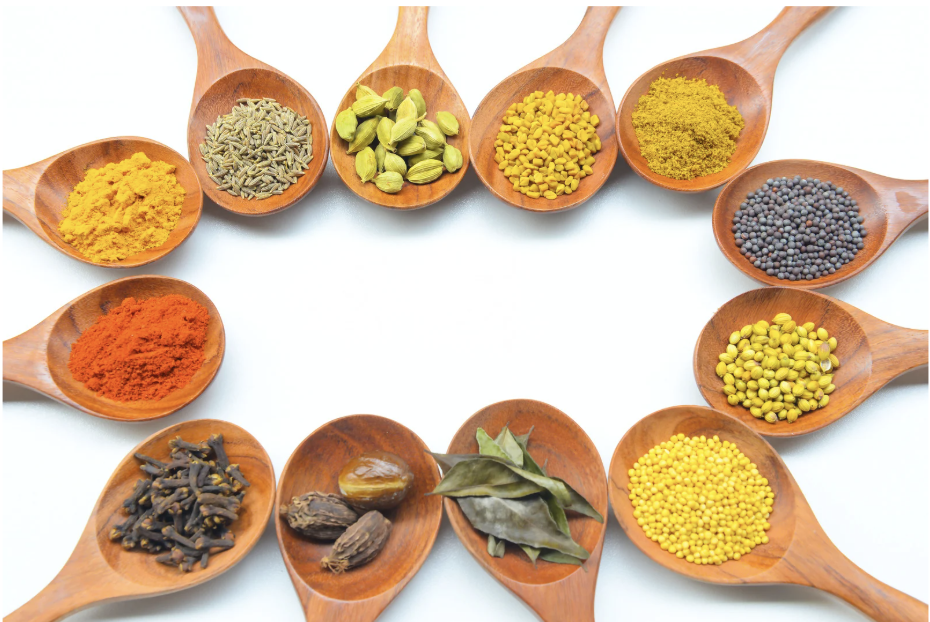
Ayurveda, India's ancient system of medicine, does not speak the language of GLP-1. It speaks the language of Agni, the digestive fire. Of Kapha imbalance, the excess earth and water energy leading to sluggishness, weight gain, and metabolic stagnation. Of the gut as the seat of health, long before the West coined the term gut-brain axis.
When Ayurvedic texts describe treatments for medoroga (metabolic disease), prameha (diabetes-adjacent conditions), and sthaulya (obesity), they are describing, in ancient language, the exact metabolic dysfunctions that GLP-1 drugs are now designed to address.
And many of the herbs they prescribed thousands of years ago? Modern research is confirming they work through GLP-1 pathways.
### Turmeric (Curcumin / Haridra)
**Traditional use:** Anti-inflammatory, digestive support, Pitta and Kapha balancing. Used in Ayurveda for metabolic conditions for over 4,000 years.
**Modern science:** Curcumin, turmeric's active compound, has been shown to directly trigger GLP-1 release from intestinal L-cells through an oxidation-dependent mechanism. A clinical study in people with Type 2 diabetes found that 1,500 mg of curcumin daily reduced weight and improved blood sugar, with effects linked to GLP-1 activity. Research also shows curcumin compensates for GLP-1 deficiency by modulating the gut microbiota and bile acid pathways.
### Fenugreek (Methi / Trigonella foenum-graecum)
**Traditional use:** A staple in Ayurvedic kitchens and pharmacopeias. Specifically prescribed for Kapha-dominant metabolic imbalances and for supporting healthy digestion and milk production.
**Modern science:** Fenugreek's soluble fiber content slows carbohydrate absorption and stimulates GLP-1 secretion from gut cells. It also supports the gut microbiome environment in which GLP-1 production can thrive.
### Berberine (Daru Haridra / Barberry)
**Traditional use:** Used in Ayurveda as an antimicrobial and metabolic herb, particularly for blood-related and digestive conditions.
**Modern science:** Berberine has been extensively studied and now carries the nickname "Nature's Ozempic" in functional medicine circles. A published review in PubMed confirmed berberine's ability to enhance GLP-1 secretion and insulin sensitivity. Mechanistically, it upregulates short-chain fatty acids (SCFAs) and stimulates GPR43 receptors, which trigger GLP-1 production.
### Triphala
**Traditional use:** One of Ayurveda's most revered formulas, combining three fruits (Amalaki, Bibhitaki, Haritaki). A comprehensive digestive tonic, detoxifier, and gut-microbiome supporter.
**Modern science:** Triphala supports the intestinal lining and microbiome health — the foundational environment in which L-cells (GLP-1 producing cells) live and function. By optimizing gut flora, it creates conditions for enhanced endogenous GLP-1 production.
### Guggul (Commiphora mukul)
**Traditional use:** Prescribed in Ayurveda for medoroga (fat tissue disorder) and thyroid support. A metabolic herb used for thousands of years.
**Modern science:** Guggul's anti-inflammatory and metabolism-boosting properties support the hormonal environment needed for healthy GLP-1 function. Research highlights its role in amplifying metabolic activity and reducing systemic inflammation, one of the key suppressors of GLP-1.
**The Vata Diet Principle:** Ayurveda's dietary recommendations for metabolic balance — the Vata-pacifying diet of warm cooked foods, healthy fats, nuts, avocados, root vegetables, and soluble-fiber-rich foods — maps almost exactly onto what modern nutritional science identifies as a GLP-1-supportive dietary pattern.
---
## What Traditional Chinese Medicine Discovered Through a Different Door
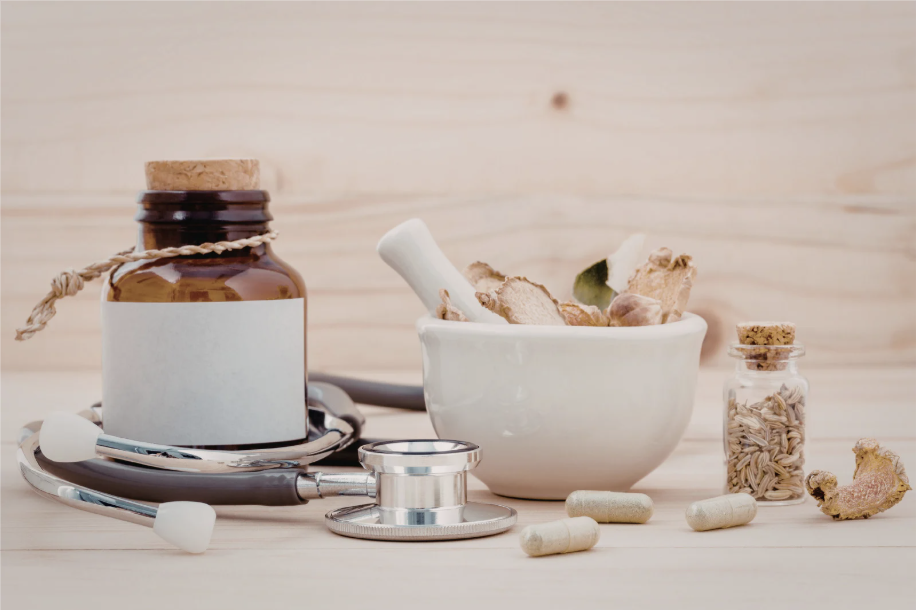
Traditional Chinese Medicine (TCM) approaches metabolism through the lens of the Spleen-Stomach system. Not the anatomical organs, but the energetic system governing digestion, transformation, and the production of Qi from food. When this system is depleted, sluggish, or damp, the result looks remarkably like what we now call metabolic dysfunction.
TCM also identifies the Liver system as central to stress regulation and smooth flow of energy through the body. Liver Qi stagnation, what happens when stress disrupts the nervous system, creates the exact hormonal environment that suppresses GLP-1 production.
### Panax Ginseng (Ren Shen)
**Traditional use:** The most revered tonic herb in TCM. Used to restore Qi, support the Spleen-Stomach system, and strengthen overall vitality. Prescribed for fatigue, metabolic weakness, and recovery.
**Modern science:** Ginsenosides, ginseng's active compounds, have been shown to boost GLP-1 release and improve blood sugar control. Animal studies demonstrated improvements in blood sugar and cholesterol with boosted GLP-1 release after just 4 weeks. Human studies also showed improved glycemic control in people with diabetes.
### Coptis (Huang Lian / Goldthread)
**Traditional use:** One of TCM's premier "heat-clearing" herbs, traditionally used for conditions now recognized as metabolic syndrome.
**Modern science:** Coptis is the most concentrated natural source of berberine. Research confirms it activates GLP-1 secretion from intestinal L-cells AND increases GLP-1 receptor sensitivity. This dual action — producing more hormone AND responding to it more effectively — is significant and not replicated by pharmaceutical GLP-1 agonists.
### Dogwood Fruit (Shan Zhu Yu / Cornus officinalis)
**Traditional use:** A Kidney and Liver tonic in TCM, used for endocrine and hormonal support, kidney-essence preservation, and metabolic nourishment.
**Modern science:** Morroniside, a glycoside found in Dogwood fruit, is a direct GLP-1 receptor agonist. The traditional pairing with Rehmannia root has been shown to increase GLP-1 levels in research studies.
### Gardenia Fruit (Zhi Zi / Gardenia jasminoides)
**Traditional use:** A heat-clearing and toxin-resolving herb in TCM, prescribed for metabolic "heat" conditions affecting the liver and digestion.
**Modern science:** In a peer-reviewed study published in the International Journal of Molecular Sciences, Gardenia fruit demonstrated greater GLP-1-stimulating effects than EGCG (the active compound in green tea). Its active compounds geniposide and gardenoside activate GLP-1 signaling pathways and have insulin-sensitizing and anti-inflammatory effects.
### Atractylodes + Poria (Bai Zhu + Fu Ling)
**Traditional use:** A classic TCM pairing to strengthen digestive Qi and calm the Shen (spirit/mind). Used for stress-driven eating, digestive weakness, and Spleen deficiency.
**Modern science:** By supporting nervous system regulation and reducing cortisol-driven stress responses, these herbs address a primary suppressor of GLP-1 production. Calming the system is not a soft intervention. It is metabolically essential.
### Green Tea (Lu Cha / EGCG)
**Traditional use:** Used medicinally in China for over 4,000 years for digestion, mental clarity, and metabolism.
**Modern science:** Green tea polyphenols, particularly EGCG, support GLP-1 release and are linked to reduced rates of Type 2 diabetes in populations with high green tea consumption.
---
## Beyond Herbs: The Lifestyle Practices Both Traditions Prescribe
Both Ayurveda and TCM share something modern pharmaceutical interventions cannot offer: they address the whole system — body, nervous system, sleep, stress, and relationship with food.
**Exercise and Movement:** Both traditions prescribe movement as medicine. Not extreme exertion, but consistent, appropriate movement that keeps Qi flowing and Agni burning. Modern research confirms that moderate-to-high intensity exercise directly stimulates GLP-1 production.
**Sleep as Hormonal Medicine:** Ayurveda treats sleep (Nidra) as one of the three pillars of life. TCM organizes healing by the body's clock. Modern research validates this completely: sleep deprivation delays GLP-1 release after meals, disrupts insulin sensitivity, and elevates cortisol.
**Stress Regulation:** Chronic stress is the metabolic enemy both traditions have always identified. In Ayurveda it depletes Ojas (vital essence) and disrupts Vata. In TCM it creates Liver Qi stagnation. In modern biochemistry, it elevates cortisol, which directly suppresses GLP-1. Practices like meditation, yoga, Tai Chi, pranayama, and time in nature are, biochemically speaking, GLP-1 support strategies.
**Eating with Awareness and Timing:** Both traditions prescribe eating in a relaxed state, without distraction, and at consistent times aligned with the body's natural rhythms. TCM recommends making lunch the largest meal. Ayurveda concurs. Modern chronobiology supports this: eating while stressed, rushed, or distracted actively suppresses the gut's hormonal response to food.
---
## A GLP-1 Supportive Diet: Ancient Wisdom Meets Modern Nutrition
Both traditions emphasize dietary patterns that modern research identifies as GLP-1-supportive:
- **High-quality protein at each meal** — stimulates GLP-1 and PYY for several hours post-eating
- **Soluble fiber** from oats, legumes, root vegetables, and cooked vegetables — feeds gut bacteria that produce short-chain fatty acids, which directly stimulate GLP-1 production
- **Healthy fats** from avocados, nuts, olive oil, and ghee — monounsaturated and omega-3 fatty acids boost GLP-1 levels
- **Fermented foods** including yogurt, miso, kimchi, and kefir — support the gut microbiome environment where GLP-1 is produced
- **Warm, cooked meals** — both Ayurveda and TCM emphasize digestibility; raw, cold foods burden the digestive system and dampen metabolic fire
---
## Why This Matters Especially for Women in Perimenopause
For women navigating perimenopause, this conversation is not abstract. The hormonal shifts of midlife — declining estrogen, fluctuating progesterone, rising cortisol reactivity, and disrupted sleep — create a perfect storm of GLP-1 suppression.
Estrogen has a direct relationship with insulin sensitivity and metabolic regulation. As it declines, the body's ability to manage blood sugar shifts, appetite hormones become less reliable, and weight distribution changes in ways that feel unfamiliar and frustrating. Many women in perimenopause find that what worked before — the same diet, the same exercise — no longer produces the same results.
This is not a willpower problem. It is a hormonal environment problem.
GLP-1 drugs address a symptom of this environment. Ayurvedic and TCM approaches address the environment itself: the gut health, the stress load, the sleep quality, the nervous system regulation, the dietary patterns. These are what the body needs to restore its own hormonal intelligence.
Both can have a place. The question is whether you want to borrow the hormone from outside, or restore the conditions under which your body makes it on its own.
---
## Using Both Is Not a Weakness. It Is Wisdom.
Let us be clear about something. If you are using a GLP-1 medication, that is not a failure. It is not a shortcut. It is not something to be ashamed of.
For some women, especially those navigating perimenopause with significant metabolic disruption, insulin resistance, or weight that has become a health risk, GLP-1 medications can be a powerful and appropriate tool. Modern medicine exists for a reason. We are not here to dismiss it.
What we are here to say is this: the medication and the ancient wisdom are not opposites. They can work together. Combining them may be the most intelligent approach of all.
Using a GLP-1 drug while simultaneously supporting your body's own hormone-producing pathways through Ayurvedic herbs, TCM practices, sleep, stress regulation, and conscious eating is not hedging. It is integration. It is using every tool available to re-teach the body how to respond to its own environment.
Think of GLP-1 medication as a bridge. It reduces appetite, stabilizes blood sugar, and buys the body time and breathing room. Ancient medicine — the herbs, the lifestyle practices, the gut-healing protocols — works to restore the underlying conditions so that, over time, the bridge becomes less necessary. The body begins to remember what it always knew how to do.
For women in perimenopause, this framing matters deeply. The hormonal shifts of midlife are real and significant. They are not something to push through with willpower, nor are they something to simply medicate away. They are an invitation to look at the whole system, to address what has been depleted or dysregulated, and to rebuild health from the inside out.
---
## What Serena and Brady's GLP-1 Endorsement Is Really Telling Us
Celebrity endorsements follow market momentum. GLP-1 drugs are a multi-billion dollar pharmaceutical category, and their effectiveness is real. We are not dismissing that.
But when athletes who spent their careers pushing the limits of natural human performance turn to pharmaceutical hormone support, it reflects something important about where we have arrived as a culture: we have created environments so metabolically hostile — so full of chronic stress, ultra-processed food, sleep deprivation, and sedentary work — that even elite-level human bodies struggle to regulate naturally.
The drugs work. Ancient medicine also works. And together, they work in a way that neither can fully achieve alone.
The deepest question is not "medication or nature?" The deepest question is: what does your body need to re-learn how to regulate itself? What environment does it need? What has been depleted that can be restored?
Your body already knows how to produce GLP-1. It has known for millennia. The goal — whether you use medication, herbs, or both — is to return it to the conditions where that knowledge can express itself again.
At Second Spring Health, we believe perimenopause is not a malfunction. It is a second spring. A profound invitation to understand your body at a deeper level and build health that is genuinely sustainable, whatever tools that requires.
The herbs, the practices, and the wisdom described in this blog are a starting point. Work with a qualified practitioner to explore what is right for your unique physiology, health history, and needs.
---
## Research References
- Alli-Oluwafuyi AM, et al. "Curcumin induces secretion of glucagon-like peptide-1 through an oxidation-dependent mechanism." *Biochimie*, 2019. https://doi.org/10.1016/j.biochi.2019.07.020
- Tian F, et al. "Curcumin Compensates GLP-1 Deficiency via the Microbiota-Bile Acids Axis." *Nutrients*, 2021. https://pubmed.ncbi.nlm.nih.gov/34986373/
- Yaribeygi H, et al. "Boosting GLP-1 by Natural Products." *Advances in Experimental Medicine and Biology*, 2021. https://pubmed.ncbi.nlm.nih.gov/34981502/
- Sun W, et al. "The Effects of a Weight-Loss Herbal Formula RCM-107 and Its Eight Individual Ingredients on GLP-1 Secretion." *International Journal of Molecular Sciences*, 2020. https://doi.org/10.3390/ijms21082854
- Cho YM, et al. "Medicinal Plants Qua Glucagon-Like Peptide-1 Secretagogue via Intestinal Nutrient Sensors." *Evidence-Based Complementary and Alternative Medicine*, 2015. https://pmc.ncbi.nlm.nih.gov/articles/PMC4693015/
- Ni X, et al. "Evidence of traditional Chinese medicine for treating type 2 diabetes mellitus." *Pharmaceutical Biology*, 2024. https://doi.org/10.1080/13880209.2024.2374794
---
**Medical Disclaimer:** This blog is for educational and informational purposes only and does not constitute medical advice. Always consult a qualified healthcare provider before beginning any new supplement, herb, or lifestyle protocol, especially if you are currently taking medication or managing a health condition. Individual results vary.