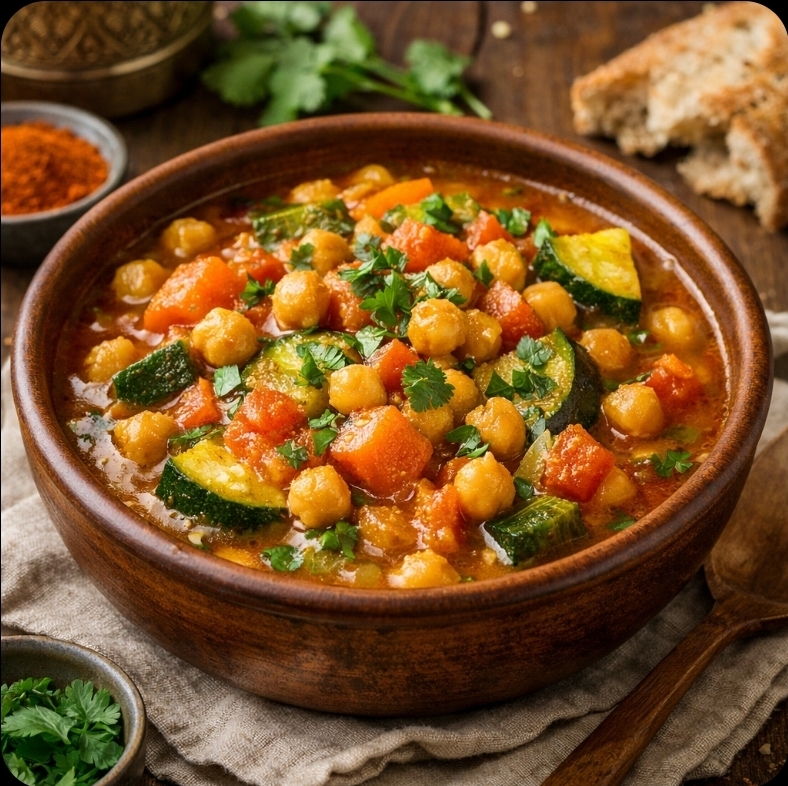
Shared by Siham Roy. A plant-based, high-protein Moroccan stew built on chickpeas, vegetables, and anti-inflammatory spices. Warming, deeply nourishing, and ready in 30 minutes.
10 minutes
20 to 25 minutes
2 to 3
Plant protein, gut health, anti-inflammatory support, skin health, cardiovascular health, blood sugar stability
A note about Siham Roy
Siham Roy is based in Virginia with a long career in real estate and healthcare coordination. She is someone who makes things run smoothly and takes care of the people around her.
One of the first things you notice about Siham is the quality of her skin: luminous, clear, and radiantly healthy. Second Spring Health is rooted in the understanding that skin health in midlife reflects what is happening internally: the state of the gut microbiome, the liver's ability to process hormones, the body's inflammation levels, and the nourishment it receives daily. Siham's skin is a reflection of how she eats and how she lives.
This stew is part of that story. Chickpeas for protein and soluble fiber. Tomato grated into the base for lycopene. Turmeric and ginger for anti-inflammatory support. Carrots for beta-carotene. Olive oil to carry all of it into the body.
What you need
- --1 cup chickpeas, cooked or canned and drained
- --1 zucchini, chopped
- --2 carrots, sliced
- --1 tomato, grated or finely chopped
- --1/2 onion, chopped
- --2 cloves garlic, minced
- --2 tablespoons olive oil
- --1 teaspoon turmeric
- --1 teaspoon paprika
- --1/2 teaspoon ginger
- --Salt and pepper to taste
- --Water or vegetable broth, enough to cover and simmer
- --Fresh cilantro to finish (optional)
How to make it
- 1Heat olive oil in a pot over medium heat. Add the onion and garlic and saute until soft.
- 2Add the grated tomato and spices: turmeric, paprika, and ginger. Cook for a few minutes, stirring, until the tomato darkens and the spices are fragrant.
- 3Add the carrots, zucchini, and chickpeas.
- 4Pour in enough water or broth to cover. Cover the pot and simmer for 20 to 25 minutes until the vegetables are tender.
- 5Garnish with fresh cilantro if using and serve warm.
The tomato step
Grating the tomato rather than chopping it breaks it down into a smooth base that integrates into the broth rather than sitting in chunks. This is the Moroccan technique: the tomato becomes part of the sauce rather than an ingredient floating in it. It also releases the lycopene more fully, which is more bioavailable from cooked and broken-down tomato than from raw.
About this recipe
This is a stew in the tradition of Moroccan home cooking: simple to make, generous in flavor, and built around the principle that good food should make you feel well rather than merely full. Siham's version is clean and clear: chickpeas for protein, a generous load of vegetables, turmeric and ginger for anti-inflammatory action, and olive oil as the fat that carries everything into the body.
For perimenopausal women, this stew addresses several of the most clinically relevant nutritional needs simultaneously. Chickpeas provide plant protein and soluble fiber: the fiber feeds the gut microbiome that converts plant estrogens and lignans from other foods in the diet into their bioactive forms, and the protein supports muscle mass preservation as estrogen declines. Turmeric's curcumin reduces NF-kB inflammatory signaling, the pathway underlying joint pain, mood disruption, and hot flash severity. The tomato base delivers lycopene, which protects against the oxidative stress that accelerates skin aging when estrogen falls.
Why this recipe supports you
- ◆Chickpeas provide complete plant protein alongside all essential amino acids when eaten with any grain
- ◆Chickpea soluble fiber feeds the gut microbiome that converts plant hormonal compounds into their bioactive forms
- ◆Turmeric curcumin reduces NF-kB inflammation, addressing joint pain, mood disruption, and hot flash severity
- ◆Ginger gingerols work through COX-2 inhibition, a complementary anti-inflammatory pathway
- ◆Tomato lycopene supports skin integrity and protects against the oxidative stress that accelerates skin aging in perimenopause
- ◆Olive oil oleocanthal has anti-inflammatory action comparable to low-dose ibuprofen through the same COX pathway
- ◆Carrots beta-carotene converts to Vitamin A, the skin vitamin that supports collagen production and cell renewal
- ◆Zucchini provides Vitamin C, potassium, and water content for hydration and cardiovascular health
- ◆Garlic allicin supports liver detoxification and has documented cardiovascular and immune benefits
- ◆The Mediterranean dietary pattern, of which this stew is a perfect example, is consistently associated with reduced severity of perimenopausal symptoms in population research
The skin connection
Skin health in midlife is not cosmetic. It is a reflection of gut integrity, liver function, inflammation levels, and nutritional status. As estrogen declines, the skin loses collagen, retains less moisture, and becomes more reactive to oxidative stress. The foods that support skin health during perimenopause are the same foods that support hormonal metabolism, gut health, and inflammation reduction.
This stew contains several of the most evidence-supported skin nutrients in whole food form. Lycopene from cooked tomato protects against UV-related skin damage and supports collagen synthesis. Beta-carotene from carrots converts to Vitamin A, which regulates skin cell turnover and prevents the thinning and dryness that estrogen loss accelerates. Vitamin C from zucchini is essential for collagen production. Olive oil's oleic acid supports skin barrier function and reduces the transepidermal water loss that makes skin look dull and dry.
Skin that shines from within is a result of what happens at the cellular level over time. This stew is one expression of that.
Serving suggestions
- ◆With couscous: the traditional North African pairing, and one that completes the amino acid profile by providing the methionine that chickpeas lack
- ◆With warm crusty bread for scooping
- ◆With brown rice for a higher-fiber, lower-glycemic grain option
- ◆Alongside a fresh herb salad with lemon and olive oil
- ◆With a dollop of plain labneh or strained yogurt on the side for additional protein
- ◆Reheated the next day: stews like this develop deeper flavor overnight as the spices continue to infuse
Sources and references
Hewlings SJ, Kalman DS. Curcumin: a review of its effects on human health. Foods. 2017.
Schwingshackl L, Hoffmann G. Mediterranean dietary pattern, inflammation and endothelial function. Nutrition, Metabolism and Cardiovascular Diseases. 2014.
Stahl W, Sies H. Lycopene: a biologically important carotenoid for humans. Archives of Biochemistry and Biophysics. 1996.
Frawley D, Lad V. The Yoga of Herbs: An Ayurvedic Guide to Herbal Medicine. Lotus Press. 1986.
Bloom in the pause.