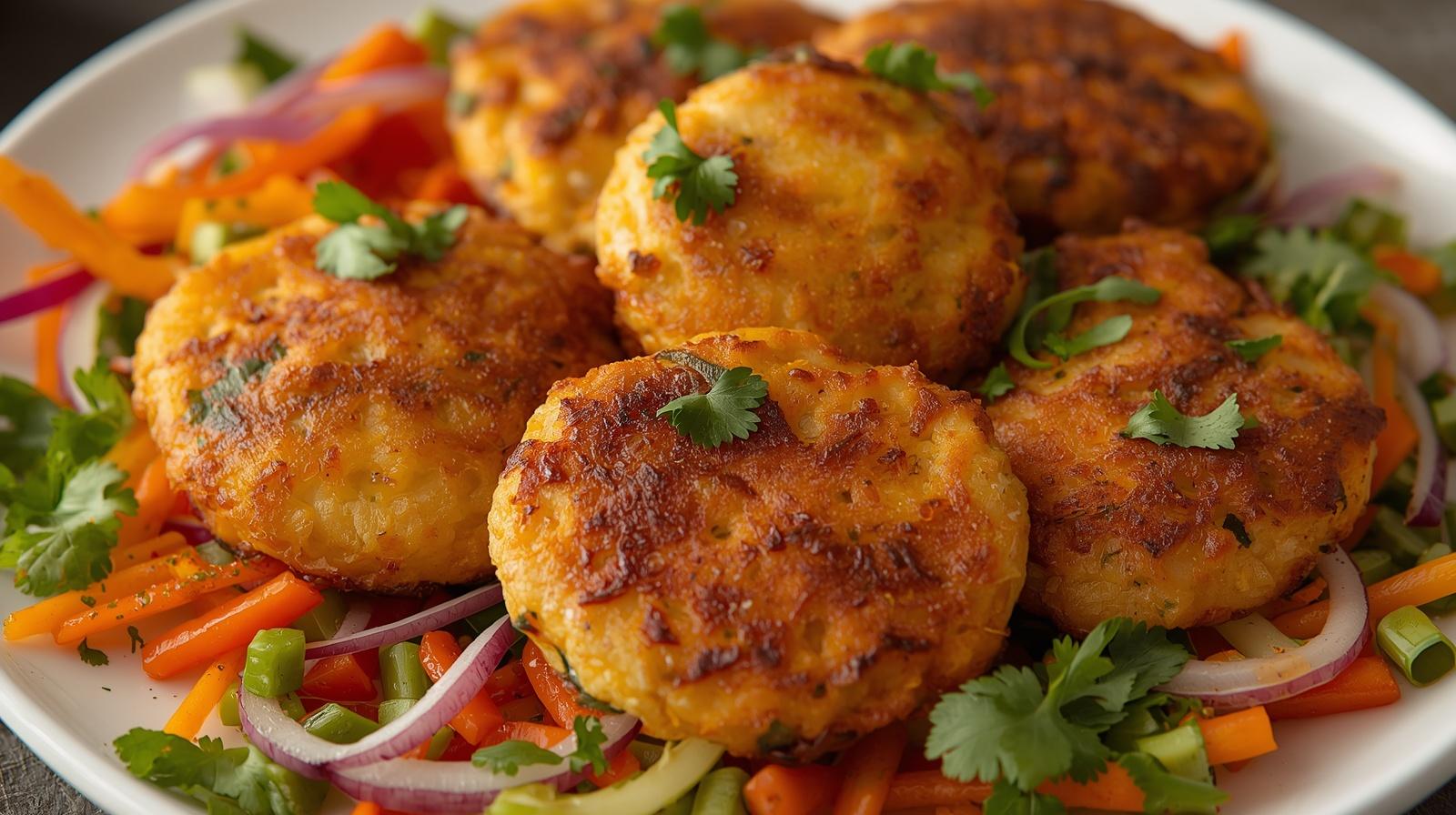
Crumbled paneer and boiled vegetables brought together with warming spices and breadcrumbs, shaped into patties and oven-baked until golden. A versatile, high-protein snack or light meal that works as a starter, a lunchbox staple, or a satisfying mid-afternoon bite.
Shared by Minaxi Mankad
A note about Minaxi
Minaxi Mankad
Minaxi Mankad is a matchmaker in the truest sense of the word: someone who sees the potential in people and instinctively knows how to bring the right ones together. She is deeply socially connected, genuinely cares for the people around her, and thinks carefully about how to be of service. That quality of attentiveness shows up in her cooking too. These patties are practical, generous, and made to be shared.
What you need
The base
- ◆1 cup paneer, crumbled
- ◆3/4 cup boiled vegetables of your choice: carrots, corn, potatoes, peas, or a mix
- ◆Breadcrumbs or 1 to 2 slices of bread, to bind (see note below)
The aromatics (optional but recommended)
- ◆Green onion, very thinly sliced
- ◆Fresh ginger, grated or finely minced
- ◆Garlic, finely minced
The spices, to taste
- ◆Salt
- ◆Turmeric
- ◆Cumin powder
- ◆Garam masala
- ◆Black pepper
- ◆Coriander powder
Breadcrumb note
Regular breadcrumbs work well for binding. For a more nutritious version, use whole wheat breadcrumbs or crumble 1 to 2 slices of whole wheat bread directly into the mixture. Whole wheat adds fiber that refined white breadcrumbs do not, which supports the gut microbiome and blood sugar stability. Both bind equally well.
Vegetable flexibility
This recipe is intentionally forgiving. Use whatever boiled vegetables you have. Carrots and peas add color and sweetness. Corn adds texture. Potato adds starch that helps bind. Any combination works. The ratio of 3/4 cup vegetables to 1 cup paneer keeps the patty cohesive without being crumbly.
How to make it
- Crumble the paneer into a mixing bowl. Add the boiled vegetables and mash or mix until combined but still slightly textured.
- Add the green onion, ginger, and garlic if using. Add the spices to taste and mix well.
- Add breadcrumbs or crumbled bread a little at a time until the mixture holds together and can be shaped without sticking to your hands. The dough should be firm enough to shape but not dry.
- Shape into round or oval patties of even thickness so they cook uniformly.
To oven bake (recommended)
- Preheat oven to 430°F (220°C).
- Place patties on a lightly greased or parchment-lined baking tray.
- Bake for 15 minutes on one side until golden brown on the bottom.
- Flip and bake for a further 10 to 12 minutes until golden brown on the other side.
To pan fry
- Heat a small amount of oil in a flat pan over medium heat.
- Cook the patties for 3 to 4 minutes per side until golden brown. Use just enough oil to coat the pan, not to shallow fry.
Oven baking is the better choice
Oven baking produces a crisp exterior with significantly less oil than pan frying, keeping the saturated fat content in check. At 430°F the patties brown well without needing to be submerged in oil. This matters for perimenopausal women managing cardiovascular risk and weight, both of which become more relevant as estrogen declines.
About this recipe
Paneer patties are exactly the kind of everyday food that works for the perimenopausal body without asking anything complicated of the cook. They are high in complete protein, rich in calcium, anti-inflammatory through their spice base, and flexible enough to use whatever vegetables are available. The oven bake method makes them genuinely light. They can be made in batches, refrigerated for a few days, and eaten cold or reheated. They travel well in a lunchbox. They work as a starter, a snack, or a light meal alongside a salad or soup.
The paneer foundation is the reason this recipe belongs on a perimenopause wellness platform. Paneer provides approximately 18 to 20 grams of complete protein per 100 grams, containing all nine essential amino acids. For perimenopausal women, this matters: estrogen's role in preserving muscle mass means that its decline accelerates the muscle loss that begins in the mid-thirties. Adequate daily protein intake, particularly from complete protein sources, is one of the most evidence-supported dietary strategies for maintaining muscle through the transition. Paneer's casein protein digests slowly, providing a sustained amino acid release rather than a spike, which also supports blood sugar stability. Its calcium content, approximately 400 to 700 mg per 100 grams depending on the source, directly addresses the accelerated bone density loss that perimenopause initiates.
The spice combination, turmeric, ginger, cumin, coriander, garam masala, is not incidental. Each brings its own anti-inflammatory action on top of the flavor it contributes. Turmeric's curcumin, ginger's gingerols, and the volatile compounds of cumin and coriander together provide a broad-spectrum anti-inflammatory payload in every patty. This is Indian cooking functioning exactly as Ayurveda intended: spices as medicine woven into daily food.
Why this recipe supports you
- ◆Paneer provides 18 to 20g of complete protein per 100g, supporting muscle mass preservation as estrogen declines
- ◆Paneer calcium (400 to 700mg per 100g) directly supports bone density against the accelerated loss of perimenopause
- ◆Paneer casein protein digests slowly, supporting sustained blood sugar stability and reducing post-meal glucose spikes
- ◆Turmeric curcumin reduces NF-kB inflammation, addressing joint pain, mood disruption, and hot flash severity
- ◆Ginger gingerols inhibit COX-2, a complementary anti-inflammatory pathway to curcumin
- ◆Cumin supports mineral absorption and digestive enzyme activity, ensuring the calcium and protein are fully utilized
- ◆Garam masala's black pepper piperine enhances the bioavailability of every other compound in the patty, particularly curcumin
- ◆Carrots and other vegetables add fiber, supporting the estrobolome and healthy estrogen clearance
- ◆Garlic allicin supports liver detoxification and cardiovascular health
- ◆Whole wheat breadcrumbs add fiber and B vitamins including B6, supporting progesterone synthesis and GABA production
- ◆Oven baking rather than frying keeps the saturated fat content appropriate for cardiovascular health
The healthiest version of this recipe
Minaxi's recipe is already well-balanced. A few small choices make it even more aligned with perimenopause wellness:
- ◆Whole wheat breadcrumbs over white: The fiber in whole wheat supports the gut microbiome and slows glucose absorption. The difference is meaningful over regular consumption.
- ◆Oven bake over pan fry: Lower oil use, same golden result. Better for cardiovascular health and weight management.
- ◆Spices in moderation: All spices, whether turmeric, ginger, garlic, onion, garam masala, or black pepper, are therapeutic in the right amounts and can aggravate acidity and Pitta when overdone. Season well and to taste, and let the cumulative benefit of consistent daily use do the work rather than adding more than needed in any single preparation.
- ◆Add a fat-soluble carrier: A small drizzle of olive oil or ghee on the patties before baking helps the curcumin from the turmeric absorb properly, as curcumin is fat-soluble and significantly more bioavailable when consumed with fat.
- ◆Variety in the vegetables: Different vegetables bring different nutrient profiles and different colors signal different antioxidant families. Red, orange, green, and white vegetables each contribute distinct compounds. Choosing seasonal, local, and fresh vegetables where possible also ensures the highest nutrient density, as produce picked and eaten in season retains more of its vitamins and phytonutrients than produce shipped long distances or stored for extended periods.
Serving suggestions
- ◆With mint-coriander chutney, which adds Vitamin C that enhances iron absorption from the paneer
- ◆Alongside a warm vegetable soup for a light, complete meal
- ◆As a starter before the Moroccan chickpea stew or the chicken tagine
- ◆Cold in a lunchbox the next day, they hold their shape and flavor well
- ◆Sliced and placed inside a whole wheat roti or flatbread with chutney and sliced cucumber
Sources and references
- • Lonnie M et al. Protein for life: review of optimal protein intake, sustainable dietary sources and the effect on appetite in ageing adults. Nutrients. 2018. doi:10.3390/nu10030360
- • Hewlings SJ, Kalman DS. Curcumin: a review of its effects on human health. Foods. 2017. doi:10.3390/foods6100092
- • National Institute of Nutrition (ICMR). Nutritive Value of Indian Foods. Indian Council of Medical Research, Hyderabad.
- • Frawley D, Lad V. The Yoga of Herbs: An Ayurvedic Guide to Herbal Medicine. Lotus Press. 1986.
Bloom in the pause.