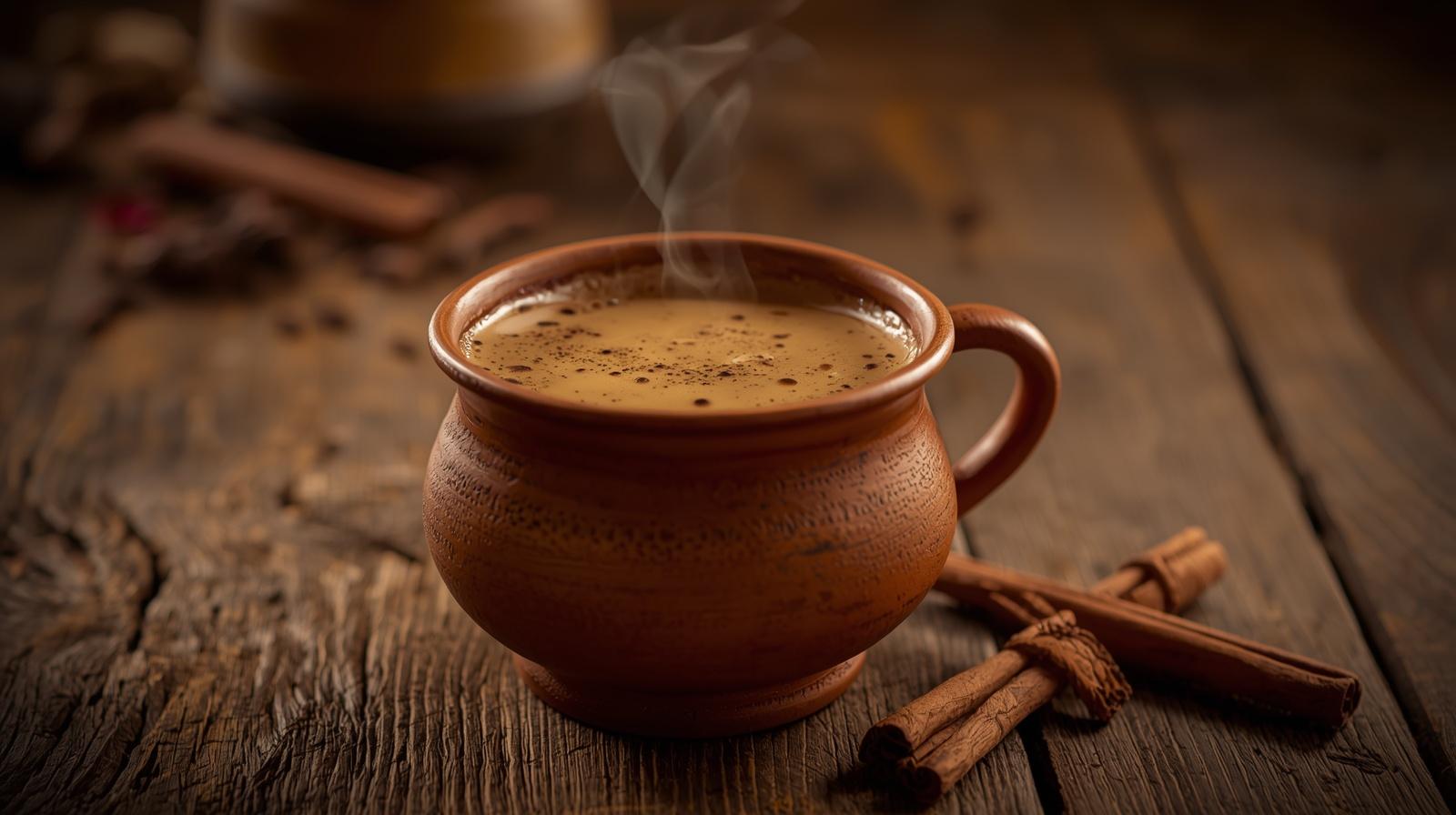
Shared by Anuja Kharod. The Indian way: water and milk in equal measure, tea leaves and fresh ginger brewed together, the milk added after and brought to a boil three or four times until the color is exactly right.
2 cups
Warming, grounding, anti-inflammatory daily ritual; digestive support; the start of a good morning
A note about Anuja Kharod
Anuja Kharod is a loving aunt whose knowledge of cooking flows directly from her parents, carrying forward the food wisdom of her family with care and generosity. She is a woman who takes care of the entire home, and it shows in what she makes: food that is simple, honest, and deeply nourishing. She studied in the United States, majoring in German, and as an immigrant helped settle her family in a new country. She is kind, devoted, and a great cook.
This is the chai she makes. One teaspoon of tea leaves per cup, fresh ginger grated in, the milk added after and brought to the boil three or four times. It is how Indian chai is made when someone who knows what they are doing makes it.
What you need for 2 cups
The water and milk
- --Approximately 1 cup water and 1 cup whole milk, or adjust to your preferred ratio
The tea: choose one
- --Loose-leaf black tea (any variety): approximately 1.5 to 2 teaspoons per cup; whole leaves extract more slowly and need more quantity
- --Chani bhuki (coarse tea powder): 1 teaspoon per cup; powder extracts faster and more strongly so you need less
The spice: choose one or a combination
- --Fresh ginger: roughly a half-inch piece per 2 cups, grated or shredded
- --Cardamom powder: approximately 1/2 teaspoon per 2 cups
- --Chai masala (tea masala): approximately 1 teaspoon per 2 cups
- --Or any combination of the above, adjusted to your taste
The sweetener (optional)
Sugar, honey, allulose, coconut sugar, or date sugar all work. Use as much or as little as you like, or none at all.
How to make it
The method is as important as the ingredients. Everything goes into the water first. The milk comes after.
- 1Pour approximately 1 cup of water into a small saucepan. Add the tea leaves and the ginger, cardamom, or chai masala, whichever you are using. Bring everything to a boil together.
- 2Let this brew in the boiling water for a minute or two. This is where the flavor develops. The tea and spice need to steep in water before the milk arrives.
- 3Add the sweetener now if you are using it, or leave it for later.
- 4Add the milk and bring the whole mixture to a boil. Let it rise up and settle. Do this 3 to 4 times.
- 5Strain into cups and serve.
The color test
Traditional masala chai should be a warm, medium brown: not pale and watery, and not so dark that the milk color is lost. A rich, confident middle. This is the target you are reading for while it is still in the pan. It is something you learn with practice.
The 3 to 4 boils
Bringing the chai to a boil multiple times after adding the milk is not just technique. Each boil integrates the flavors more deeply, develops the body of the tea, and produces the characteristic richness of Indian chai that a single boil cannot achieve. Do not skip this.
About this recipe
This is not a recipe so much as the foundation of a daily practice that hundreds of millions of people follow without thinking about it. Indian chai made this way, with water and milk in equal measure, tea and ginger brewed together in the water before the milk arrives, brought to the boil multiple times, has been the morning anchor of Indian domestic life for generations.
From a functional standpoint, this cup is extraordinary. Black tea provides L-theanine and theaflavins alongside its caffeine, giving a gentler and more sustained alertness than coffee. Fresh ginger provides gingerols with potent anti-inflammatory action through COX-2 inhibition, directly addressing the joint pain, headaches, and systemic inflammation of perimenopause. Cardamom, when included, reduces cortisol and warms the digestive system. Chai masala, which typically contains ginger, cardamom, black pepper, cinnamon, and clove, adds piperine (which enhances the absorption of every other compound in the cup), blood-sugar-supporting cinnamon, and analgesic eugenol from the clove.
The spice: what each one does
Fresh ginger (half-inch piece per 2 cups, grated)
Ginger is the primary anti-inflammatory in this cup. Gingerols, particularly 6-gingerol, inhibit COX-2, the same inflammatory enzyme that ibuprofen blocks, but without the gastric side effects. For perimenopausal women, this matters: joint pain is one of the most common and underreported symptoms of the transition, and a daily cup of ginger chai provides a cumulative, gentle anti-inflammatory dose that works through consistent use rather than acute treatment. Fresh ginger also improves gastric motility and nutrient absorption from the meal that follows.
Cardamom powder (1/2 teaspoon per 2 cups)
Cardamom is the nervine and digestive governor of this cup. Its cineole content reduces cortisol at the adrenal level, providing a biochemical counterbalance to the caffeine's stimulating effect. For perimenopausal women whose HPA axis is under sustained stress, the combination of L-theanine calming the central nervous system and cardamom's cineole reducing cortisol at the adrenal level makes chai with cardamom genuinely different from plain black tea. Its warming, carminative action also prevents the bloating that some people experience with dairy.
Chai masala (1 teaspoon per 2 cups)
A good chai masala contains ginger, cardamom, black pepper, cinnamon, and clove, and sometimes fennel, nutmeg, and star anise. Each spice contributes: black pepper's piperine enhances the absorption of every other compound in the cup. Cinnamon supports blood sugar regulation, addressing the insulin sensitivity changes of perimenopause. Clove provides eugenol, a potent anti-inflammatory and analgesic. Fennel, if present, reduces bloating and supports estrogen metabolism. Using chai masala is the most complete approach when all three therapeutic pathways matter.
The sweetener
Sweetener is entirely personal and can go in at any point: in the water with the tea, after the milk, or added to individual cups at the table.
- ◆Sugar: The most traditional. Dissolves easily at any stage.
- ◆Honey: Add to individual cups after pouring, not to the boiling pot. Honey in Ayurveda should never be heated above body temperature, as heating degrades its enzymes.
- ◆Coconut sugar: A slightly caramel flavor with a lower glycemic index than white sugar. Dissolves well in hot liquid.
- ◆Date sugar: Made from dried dates, provides trace minerals and a mild sweetness. Can clump slightly; stir well.
- ◆Allulose: A rare natural sugar with no caloric impact and no glycemic effect. Dissolves like regular sugar. A practical option for women managing blood sugar during perimenopause.
- ◆No sweetener: Entirely valid, particularly if the spices are strong and the milk is whole. A well-made chai with cardamom needs no sweetener.
Why this recipe supports you
- ◆Black tea theaflavins and L-theanine provide calm, sustained alertness distinct from the cortisol-spiking effect of coffee
- ◆Fresh ginger gingerols reduce inflammation through COX-2 inhibition, addressing the joint pain of perimenopause
- ◆Cardamom cineole reduces cortisol, providing adrenal support during the high-demand years of the transition
- ◆Chai masala black pepper piperine enhances the absorption of every other compound in the cup
- ◆Chai masala cinnamon supports blood sugar regulation as insulin sensitivity declines
- ◆Whole milk provides calcium and fat-soluble vitamins alongside the tea
- ◆The ritual itself, the twice-daily cup at the same time each day, activates the parasympathetic nervous system through sensory familiarity and comfort
- ◆The multiple boils produce a depth of flavor and integration that cannot be achieved any other way
When to drink it
Masala chai is a morning and afternoon drink. Traditionally it is enjoyed first thing in the morning and again in the mid-afternoon, often around 4 o'clock when the day calls for a pause. After the late afternoon, it is best to stop. Black tea contains caffeine, and drinking chai in the evening will interfere with sleep. For a woman navigating perimenopause, where sleep disruption is already one of the most common and most damaging symptoms, protecting the evening from caffeine is a meaningful daily choice.
Bloom in the pause.