Shared By
Sonal Popat
Sonal Popat is a Senior Software Engineer and AWS Certified Solutions Architect based in the Greater Seattle area, with a career spanning Oracle, Nintendo, and The Walt Disney Company. She holds gold medals for achieving the highest GPA in both her undergraduate and graduate programs in Computer Engineering. She brings the same care and precision to her kitchen.
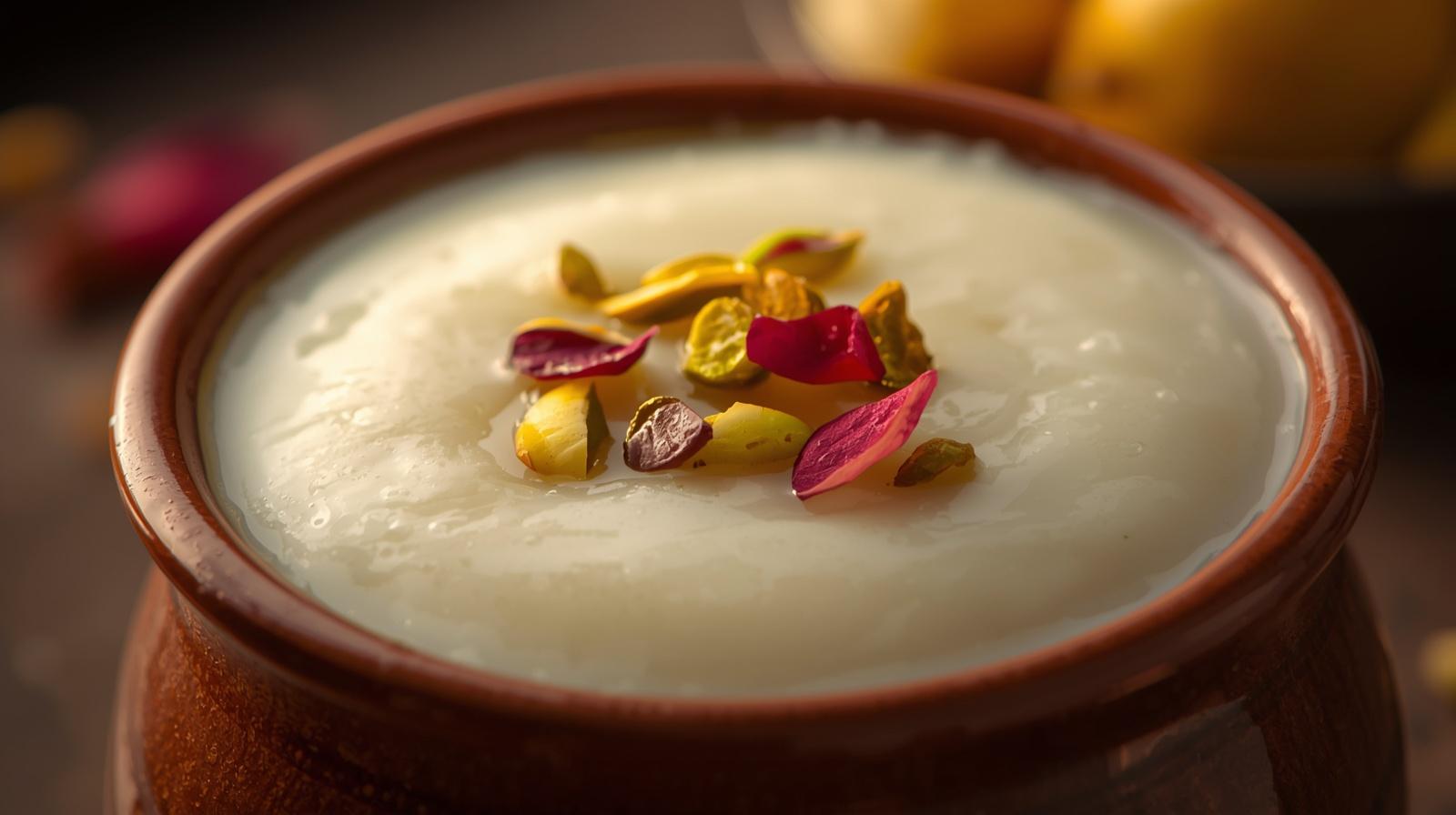
Bhapa Doi is one of the great desserts of Bengali cuisine, and Sonal's version is simple, beautiful, and deeply traditional. Four ingredients. Patient preparation. An extraordinary result.
What you need
- ◆1 cup yogurt, hung overnight to make thick hung curd
- ◆1/3 cup sweetened condensed milk
- ◆1/4 teaspoon cardamom powder
- ◆1/3 cup chopped nuts of your choice: pistachios, almonds, cashews, or a mix
- ◆10 to 12 saffron strands, soaked in 6 teaspoons of warm milk for at least 15 minutes
The hung curd step
This is the foundation of the dish and cannot be rushed. Line a colander with clean muslin cloth or several layers of cheesecloth. Add the yogurt, tie the cloth into a bundle, and hang it over a bowl in the refrigerator for at least 4 hours, ideally overnight. The whey drains away, leaving thick, dense, creamy hung curd. Without this step the Bhapa Doi will be too thin.
The saffron step
Warm the milk gently, do not boil it, and add the saffron strands. Leave for at least 15 to 20 minutes. The milk will turn a deep golden orange. Use the saffron milk with the strands included. This extraction time is what releases crocin and safranal, the active compounds, fully into the liquid.
How to make it
- Hang the yogurt for 4 to 8 hours or overnight. Soak the saffron in warm milk for at least 15 minutes.
- Whisk the hung curd smooth until there are no lumps.
- Add the condensed milk and mix well.
- Add the cardamom powder and the saffron milk, strands included. Mix until evenly golden.
- Fold in most of the nuts, reserving a small handful for garnish.
- Refrigerate for at least 1 hour. Serve cold, topped with the reserved nuts and a few extra saffron strands.
About this recipe
Bhapa Doi is a Bengali dessert whose name means steamed yogurt. It is traditionally set by steaming, which gives it its custard-like texture, though the no-cook version made with hung curd and condensed milk produces a similar silkiness with much less effort. It is eaten at celebrations, at the end of festive meals, and served chilled in small clay pots called bhaand. It is one of the most beautiful things you can make with four simple ingredients.
What makes Bhapa Doi particularly meaningful for perimenopausal women is the combination of its therapeutic ingredients. Condensed milk and hung curd together provide complete protein and calcium in a cold, easily digestible form. Saffron's crocin and safranal have documented clinical effects on mood, anxiety, and hot flash frequency. Cardamom governs the formula, making cold dairy easier to digest and providing its own cortisol-reducing action. The nuts add healthy fat, magnesium, and phytosterols. This is a festive dessert with genuinely therapeutic ingredients inside it.
Why this recipe supports you
- ◆Hung curd concentrates protein and reduces lactose, making it lighter and more digestible than plain yogurt
- ◆Saffron crocin supports serotonin, dopamine, and GABA pathways, addressing mood and anxiety in perimenopause
- ◆Clinical research has found saffron supplementation reduces hot flash frequency and severity
- ◆Cardamom makes cold dairy digestible and reduces cortisol through its cineole content
- ◆Condensed milk provides the Madhura rasa (sweet taste) that nourishes depleted tissues and calms Vata
- ◆Pistachios contain phytosterols associated with reduced hot flash frequency in postmenopausal women
- ◆Almonds provide Vitamin E for hormonal health and skin elasticity
- ◆Cashews provide magnesium for sleep quality and nervous system calm
- ◆The cold serving temperature soothes Pitta heat, making it appropriate during active hot flash phases
Ingredients and their wisdom
Hung curd (from 1 cup yogurt)
Thermal quality: Cooling. The concentrated protein base.
Ayurveda: In Ayurveda, plain cold yogurt (Dadhi) is classified as heavy (Guru) and potentially ama-forming when eaten in large amounts, cold, or at night. Hung curd is different: removing the whey concentrates the protein, reduces the lactose, and lightens the heaviness. It is closer to what Ayurveda calls Takra (buttermilk preparations) than to plain yogurt. Cardamom in this recipe ensures even hung curd is received well by the digestive system.
A note of honesty
Condensed milk is a heavily processed ingredient, cooked down with large amounts of refined sugar, and Ayurveda would not classify it as a therapeutic food. It is heavy, Kapha-aggravating, and works against blood sugar stability. It is also what makes Bhapa Doi what it is: without it, this is a different dish entirely. The saffron and cardamom are genuinely therapeutic. The hung curd is nourishing. The condensed milk places this firmly in the category of occasional dessert, not daily medicine.
Nutritionally, hung curd from one cup of yogurt provides approximately 10 to 12 grams of complete protein with all essential amino acids. It is rich in calcium, phosphorus, and the lactic acid that supports the gut microbiome. The microbiome in turn converts plant lignan precursors from other foods in the diet into their bioactive phytoestrogenic forms, making good gut health directly relevant to hormonal balance in perimenopause.
Saffron (10 to 12 strands, soaked in warm milk)
Thermal quality: Warming. The mood, spirit, and hormone medicine of this recipe.
Ayurveda: Saffron (Kumkuma) is classified as Medhya (mind-nourishing), Hridya (heart-tonic), and Vrushya (reproductive tonic). It is one of the most important herbs for women's emotional and reproductive health in classical Ayurveda. Soaking in warm milk is the traditional method because the fat in the milk extracts the fat-soluble compounds alongside the water-soluble crocin, producing a more complete extraction than water alone.
TCM: Saffron (Xi Hong Hua) invigorates Blood, moves Liver Qi stagnation, and calms the Shen. The Liver Qi stagnation of perimenopause, manifesting as irritability, emotional volatility, and irregular periods, is one of saffron's primary classical indications.
Multiple randomized controlled trials have found saffron extract comparable to low-dose antidepressants for mild to moderate depression with fewer side effects. A 2017 clinical study found that saffron supplementation reduced hot flash frequency and severity in perimenopausal women. Ten to twelve strands in a serving of Bhapa Doi is a meaningful daily therapeutic dose in one of the most pleasurable forms imaginable.
Cardamom (1/4 teaspoon)
Thermal quality: Warming to the digestive system. The governing carrier of this formula.
Cardamom (Ela) is the classical Anupana, the carrier herb, that makes cold dairy preparations safe and digestible for all constitutions. Its warming, aromatic action counterbalances the cold, heavy quality of hung curd and condensed milk, warming the digestive channel and ensuring the protein and saffron compounds are properly absorbed. Its cineole content reduces cortisol at the adrenal level, complementing saffron's central nervous system calming through a different pathway.
Sweetened condensed milk (1/3 cup)
The ingredient that gives Bhapa Doi its characteristic texture.
Condensed milk is what makes Bhapa Doi what it is. The combination of its sweetness, fat, and thick body with the tartness of hung curd produces the silky, dense, custard-like texture that defines this dessert. Without it you have a different dish. In Ayurvedic terms, its Madhura rasa (sweet taste) nourishes depleted Vata, calms the nervous system, and supports Ojas, the vital essence underlying immunity and reproductive vitality. Eaten as an occasional dessert in moderate amounts, this is welcome. As a daily food, it is not appropriate for perimenopausal women managing blood sugar or weight.
Chopped nuts (1/3 cup)
Thermal quality: Neutral to slightly warming. Healthy fat, minerals, and texture.
Pistachios, almonds, and cashews each contribute differently. Pistachios contain phytosterols and plant lignans associated with reduced hot flash frequency in postmenopausal women. Almonds provide Vitamin E, the fat-soluble antioxidant that supports hormonal health and skin elasticity. Cashews provide magnesium for sleep quality and muscle calm. All three slow glucose absorption, supporting the blood sugar stability that deteriorates during perimenopause. Choose one variety or mix all three.
Serving and storing
Serve cold in small bowls or glasses, topped with the reserved nuts and a few extra saffron strands. Bhapa Doi keeps refrigerated for 2 to 3 days. The saffron flavor deepens after a day in the refrigerator, so it is often better the next day than the day it is made.
In Bengal, Bhapa Doi is traditionally served chilled in small clay pots called bhaand at the end of a festive meal. For an everyday version, a small bowl with a careful spoon is just as right.
Who should be mindful
Bhapa Doi is a festive dessert with genuinely therapeutic ingredients inside it. Like all things, it is best understood clearly.
- Blood sugar Condensed milk is high in refined sugar and represents a significant glycemic load. Perimenopausal women managing insulin resistance, pre-diabetes, or blood sugar dysregulation should enjoy this only in very small amounts on special occasions, or avoid it altogether.
- Dairy Both hung curd and condensed milk are dairy. Hung curd has reduced lactose from the hanging process, but condensed milk is concentrated lactose and dairy protein. Those with a dairy allergy should avoid this recipe entirely. Those with lactose sensitivity should proceed with caution.
- Kapha constitution In Ayurveda, this is a cold, heavy, sweet preparation. Women who run Kapha-dominant, experience slow digestion, congestion, or excess weight should eat this very occasionally and in small amounts.
- Evening and night Cold dairy at night is specifically contraindicated in Ayurveda. This is best eaten earlier in the day, not as a late-night or after-dinner dessert.
- Nut allergies The nuts are a topping and can be omitted entirely without affecting the dish.
Sources and references
- Lopresti AL, Drummond PD. Saffron (Crocus sativus) for depression: a systematic review. Human Psychopharmacology. 2014. doi:10.1002/hup.2434
- Kashani L et al. Saffron for treatment of fluoxetine-induced sexual dysfunction in women. Human Psychopharmacology. 2013. doi:10.1002/hup.2334
- Carughi A et al. Pairing nuts and dried fruit for cardiometabolic health. Nutrition Journal. 2016. doi:10.1186/s12937-016-0134-2
- Frawley D, Lad V. The Yoga of Herbs: An Ayurvedic Guide to Herbal Medicine. Lotus Press. 1986.
- Maciocia G. The Practice of Chinese Medicine. Churchill Livingstone. 2008.