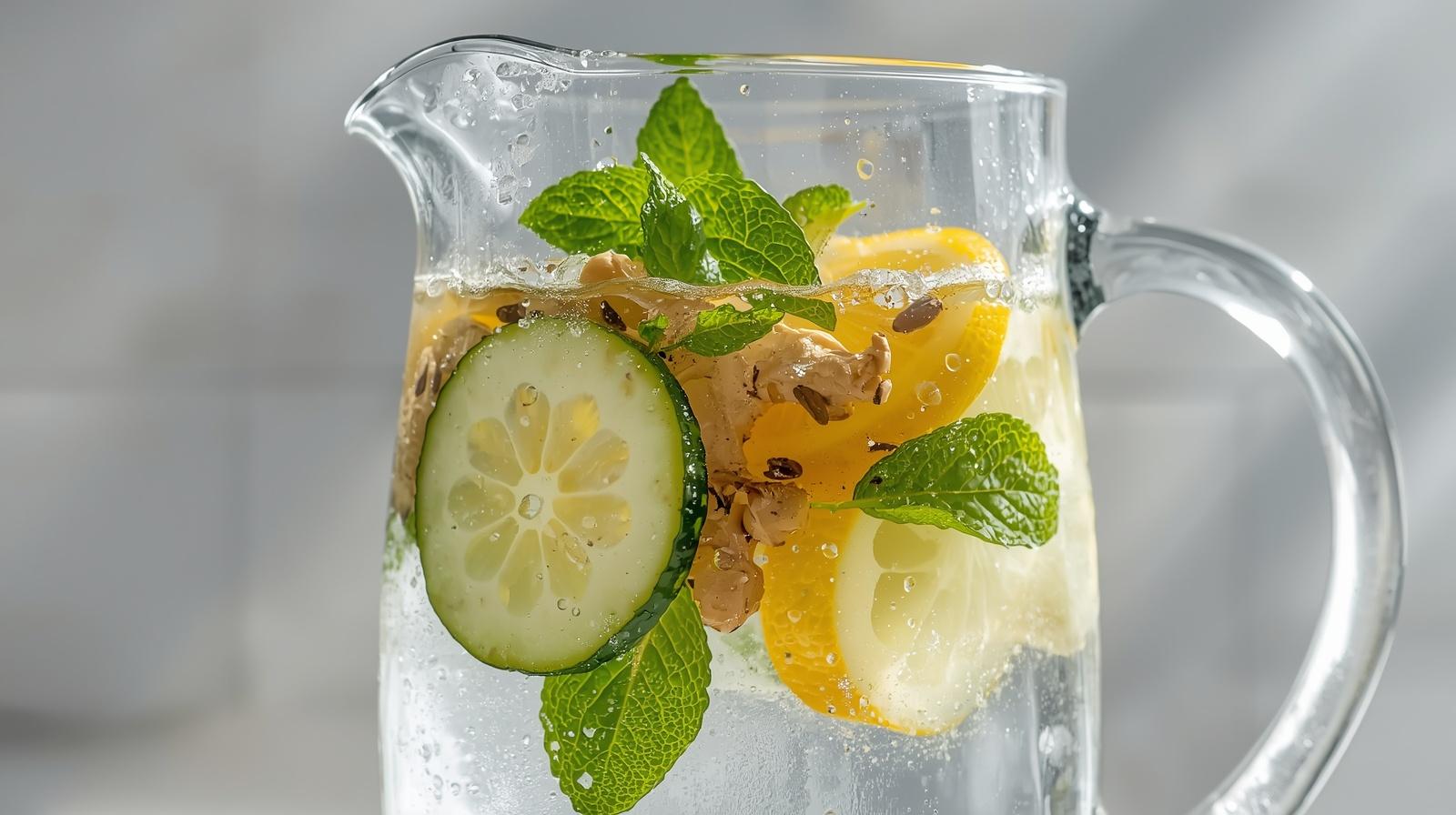
Fennel seeds, fresh mint, ginger, lemon, and cucumber steeped in cold water. A hydrating, digestive, and gently detoxifying drink that works at room temperature, chilled from the refrigerator, or warm. Simple to make, keeps well, and appropriate throughout the day.
Shared by Vyoma Pandya
A note about Vyoma Pandya
Vyoma Pandya is raising her family in Australia with the kind of quiet intentionality that shapes not just children but culture. She keeps traditions alive in a new country, cooks food that everyone wants to try, and shares her art and food through social media in a way that makes people genuinely hungry, not just impressed. She is a generation shaper in the truest sense: the recipes, the values, the flavors her children grow up with become their reference point for home, wherever in the world they eventually land.
This detox water is the kind of thing a woman like Vyoma makes because it is both practical and beautiful: a jar of fresh ingredients that sits on the counter, looks inviting, and quietly does a great deal of good.
What you need
- ◆1 teaspoon fennel seeds (variyali, sauf)
- ◆1 lemon, cut into rings
- ◆1 cup fresh mint leaves
- ◆1/2 inch fresh ginger, grated
- ◆2 Japanese cucumbers, sliced (optional but recommended)
- ◆1 to 1.5 liters water
Japanese cucumbers
Japanese cucumbers are slender, thin-skinned, and mildly flavored, with fewer seeds than regular cucumbers. They infuse the water more gently and are listed as optional but they add meaningful hydration compounds and a clean, fresh note to the drink. Regular cucumber works if Japanese cucumber is not available.
Temperature flexibility
This drink works at room temperature, cold from the refrigerator, or gently warmed. Ayurveda and TCM both advise against adding ice, as ice suppresses digestive fire and contracts the meridians. Serve it as it comes from the jar or pitcher.
How to make it
- Add the fennel seeds, lemon rings, mint leaves, grated ginger, and cucumber slices to a large jar or pitcher.
- Pour the water over everything.
- Leave to infuse. Either works: a few hours at room temperature, or overnight in the refrigerator. The longer it steeps, the more pronounced the flavor of each ingredient.
- Drink throughout the day directly from the jar or poured into a glass. No straining needed unless you prefer it.
- Discard after 2 days if kept at room temperature, or after 5 days if refrigerated. If the taste seems off before then, trust your senses and make a fresh batch.
Overnight method
Assembling the jar the night before and refrigerating it means you wake up to a ready drink with a full, developed flavor. This is the easiest approach for making it a daily habit.
About this recipe
The word detox is used loosely in wellness culture, often to describe things that have little to do with actual detoxification. This recipe earns the name. Each of its five ingredients has a documented role in supporting the body's real detoxification pathways: the liver, the kidneys, the lymphatic system, and the gut. Together they form a drink that actively assists the body in processing and eliminating what it no longer needs, including the excess estrogen metabolites that are particularly relevant during perimenopause.
In Ayurveda, a drink like this is called a Kashaya in its warm form: a medicinal water infused with herbs that cleanse the channels (srotas), kindle digestive fire, and support the elimination of ama (undigested residue and metabolic waste). The five ingredients here address the primary Ayurvedic concerns of the perimenopausal transition: fennel cools Pitta and reduces Vata, mint clears heat from the liver and stomach, ginger kindles agni and moves ama, lemon supports liver function and Vitamin C synthesis, and cucumber hydrates and cools. In TCM, this combination clears Liver Qi stagnation, promotes the smooth flow of fluids through the body, and supports the Kidney's role in water metabolism. The result is a daily drink that is also a daily practice of internal cleansing.
Why this drink supports you
- ◆Fennel anethole supports estrogen receptor activity and has documented effects on hot flash reduction
- ◆Fennel reduces bloating and digestive cramping by relaxing smooth muscle in the digestive tract
- ◆Mint menthol cools the body's internal temperature, providing symptomatic relief during hot flashes
- ◆Mint supports bile flow and liver function, aiding in the clearance of estrogen metabolites
- ◆Ginger gingerols reduce systemic inflammation through COX-2 inhibition, addressing joint pain and heat
- ◆Ginger supports gastric motility and digestive fire, ensuring the body processes and eliminates waste efficiently
- ◆Lemon Vitamin C supports liver phase one and phase two detoxification pathways
- ◆Lemon limonene from the peel supports liver enzyme activity and bile production
- ◆Cucumber silica and high water content support connective tissue and skin hydration, both of which decline with estrogen
- ◆Cucumber cucurbitacins have documented anti-inflammatory properties
- ◆The base of plain water ensures consistent hydration, directly counteracting the fluid loss of hot flashes and night sweats
- ◆As a daily ritual, this drink structures hydration into the day in a way that plain water alone often does not
Ingredients and their wisdom
Fennel seeds (1 teaspoon, variyali, sauf)
Thermal quality: Cooling. Phytoestrogenic, digestive, and Vata-reducing.
Ayurveda: Fennel (Shatapushpa) is one of the most important herbs for women's reproductive and digestive health in Ayurveda. It cools Pitta, reduces Vata, and is specifically indicated for the internal heat, bloating, and digestive disruption of the perimenopausal transition. In infused water, the seeds release their volatile oils and phytoestrogenic compounds slowly over several hours, making this a gentle, sustained delivery method rather than an acute dose.
TCM: Fennel (Xiao Hui Xiang) warms the middle Jiao and moves Liver Qi stagnation. The bloating, cramping, and digestive tightness that Liver Qi stagnation produces during perimenopause are among fennel's primary classical indications. In cold water infusion the warming action is moderated, making it appropriate even for Pitta-dominant women.
Fresh mint (1 cup)
Thermal quality: Cooling. Liver-supporting, heat-clearing, and aromatic.
Ayurveda: Mint (Pudina) is cooling, light, and pungent. It reduces Pitta and Kapha, clears heat from the stomach and liver, and refreshes the palate and digestive channel. Its aromatic quality activates the nervous system in a calming rather than stimulating direction, making it appropriate before or after meals. In Ayurveda, mint is also used to support the clearance of ama from the digestive tract.
TCM: Mint (Bo He) is one of the classical herbs for clearing Wind-Heat and soothing the Liver. It disperses Liver Qi stagnation, clears heat from the head and eyes, and has a gentle antispasmodic action on the digestive tract. For perimenopausal women experiencing irritability, headaches, and the tight chest of Liver Qi stagnation, mint in daily water is a simple and consistent support.
Mint menthol activates the TRPM8 cold receptor in the mouth and throat, producing a cooling sensation that provides direct symptomatic relief during hot flashes. It also supports bile production in the liver, assisting in the processing of dietary fats and the clearance of estrogen metabolites through the bile pathway.
Fresh ginger (1/2 inch, grated)
Thermal quality: Warming. The digestive activator and anti-inflammatory in this formula.
Ayurveda: Fresh ginger (Ardraka) is considered the universal medicine in Ayurveda. It kindles Agni (digestive fire), moves ama out of the channels, reduces Vata and Kapha, and provides warming anti-inflammatory action throughout the body. In a cooling drink that otherwise tends toward Pitta-reducing ingredients, ginger provides the digestive warmth that ensures everything is properly processed and absorbed.
TCM: Fresh ginger (Sheng Jiang) warms the middle Jiao, disperses Cold, and supports the Stomach and Spleen in their digestive functions. It is frequently added to cooling formulas in TCM precisely to prevent the cooling ingredients from over-chilling the digestive center. Its presence in this drink is functionally important: mint and cucumber are both cooling, and ginger balances the overall thermal quality of the formula.
Half an inch of fresh ginger grated into a liter of water provides a gentle, pleasant warmth without overpowering the other flavors. The grating rather than slicing releases more of the active gingerols into the water.
Lemon (1, cut into rings)
Thermal quality: Cooling. Liver-supporting, Vitamin C-rich, and brightening.
Ayurveda: Lemon (Nimbu) is sour in taste (Amla rasa), cooling in its post-digestive effect, and liver-stimulating. The sour taste in Ayurveda kindles digestive fire, stimulates bile flow, and supports the liver's cleansing function. Cutting the lemon into rings rather than juicing it infuses both the juice and the peel into the water. The peel is where the limonene and flavonoids are concentrated, which are the most liver-supportive compounds.
TCM: Lemon is classified in TCM as sour, cooling, and entering the Liver and Stomach meridians. Sour taste in TCM astringes and consolidates, nourishing Liver Yin and supporting the Liver's role in smooth Qi flow. It also generates Body Fluids, addressing the dryness of Yin deficiency.
Lemon's Vitamin C supports both phase one and phase two of liver detoxification, the two-stage process through which the liver neutralizes and packages toxins and excess hormones including estrogen metabolites for elimination. Limonene from the peel specifically induces glutathione S-transferase, a key phase two liver enzyme. Cutting into rings and leaving the peel on maximizes both flavor and therapeutic benefit.
Japanese cucumber (2, sliced, optional)
Thermal quality: Cooling. Hydrating, anti-inflammatory, and connective tissue-supporting.
Ayurveda: Cucumber (Trapusha) is cooling, sweet, and Pitta-reducing. It is one of the most hydrating foods available and is specifically recommended in Ayurveda during hot weather, fever, and Pitta-dominant conditions including the internal heat of perimenopause. Its high water content and mild, cooling sweetness make it ideal as a background ingredient in a drink that is already cooling in overall character.
TCM: Cucumber (Huang Gua) clears Heat, promotes urination, and reduces swelling. It cools and moistens, supporting Body Fluids in conditions of Heat and dryness. In TCM dietary therapy for perimenopause, cooling, moistening foods like cucumber directly address the Yin deficiency pattern by replenishing Body Fluids depleted by deficiency heat.
Cucumber's silica content supports collagen synthesis in connective tissue and skin, directly relevant as estrogen's role in collagen production diminishes during perimenopause. Its cucurbitacins have documented anti-inflammatory properties. Japanese cucumber is preferred here for its thin skin, fewer seeds, and milder flavor that does not overpower the other ingredients in the water.
Storing and serving
Make a fresh batch every one to two days at room temperature, or keep a jar refrigerated and replenish every few days. The drink is at its most flavorful after several hours of infusion and continues to develop through the first day. After two days at room temperature or five days refrigerated, discard and make fresh. If the taste seems off before then, trust your senses.
Serve at room temperature or cold from the refrigerator. Do not add ice. Both Ayurveda and TCM advise against drinking ice-cold water as it suppresses digestive fire and in TCM contracts the meridians and impairs the smooth flow of Qi and Blood. The drink is cooling enough without ice.
Drink throughout the day. A glass first thing in the morning, another mid-morning, and through the afternoon is a simple and effective daily hydration habit that also delivers the therapeutic compounds of all five ingredients consistently across the day.
Sources and references
- Rahimikian F et al. Effect of Foeniculum vulgare Mill. (fennel) on menopausal symptoms in postmenopausal women. Menopause. 2017. doi:10.1097/GME.0000000000000900
- Rozza AL et al. The gastroprotective effect of mint essential oil in experimentally induced gastric lesions. Brazilian Journal of Pharmaceutical Sciences. 2011. doi:10.1590/S1984-82502011000300010
- Higdon JV, Frei B. Lemon and citrus flavonoids: potential health effects. Critical Reviews in Food Science and Nutrition. 2003.
- Frawley D, Lad V. The Yoga of Herbs: An Ayurvedic Guide to Herbal Medicine. Lotus Press. 1986.
- Maciocia G. The Practice of Chinese Medicine. Churchill Livingstone. 2008.