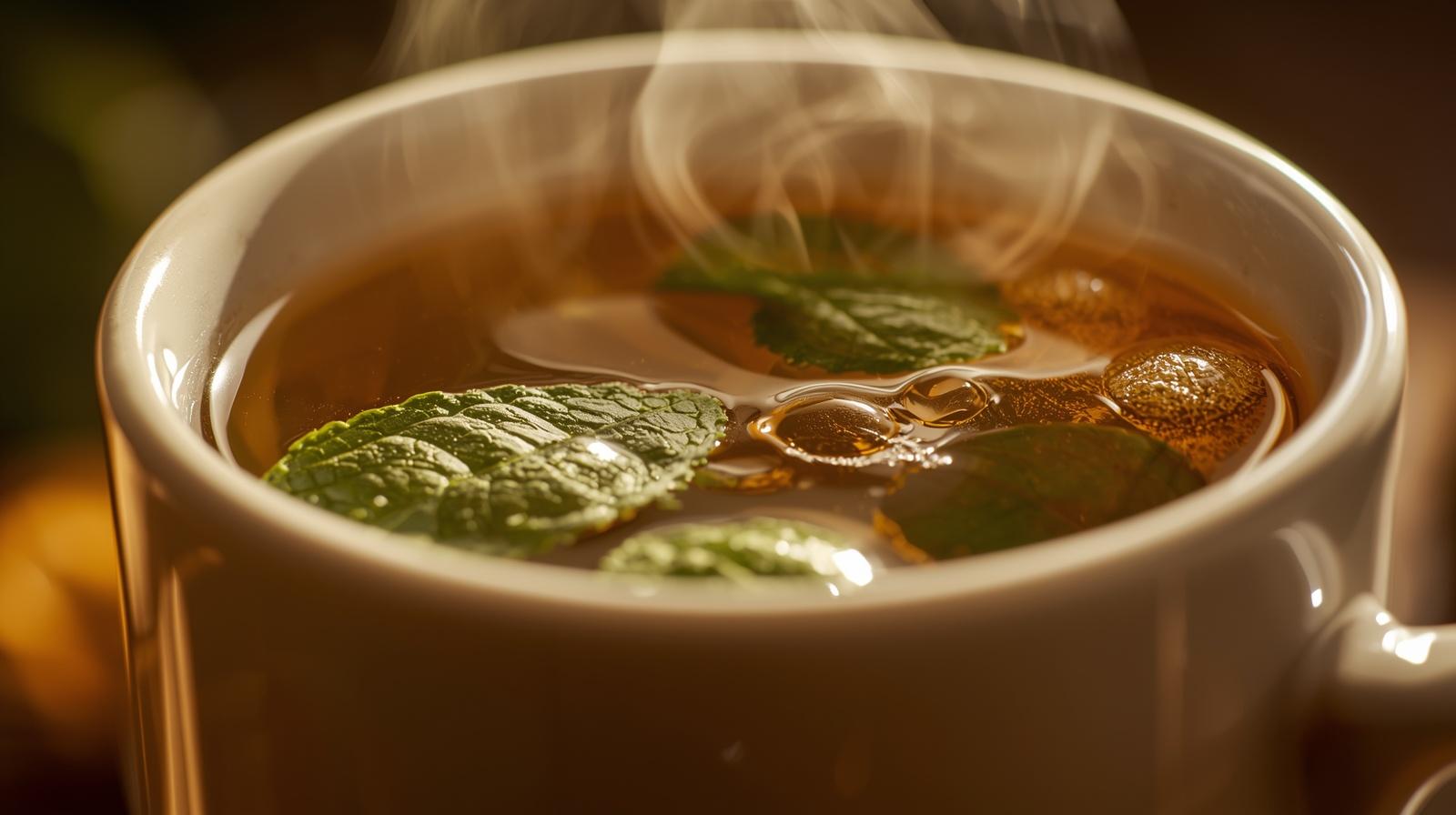
Shared by Dr. Laila Faizi Sohail. A two-ingredient brew from Turkish tradition that soothes an upset stomach, settles digestion, and carries more hormonal benefit than it appears.
2 minutes
5 minutes
2 glasses (approximately 500 ml)
None
Upset stomach, bloating, nausea, digestive ease, any time of day
What you need
- --1 small spoon (roughly 1 teaspoon) of fresh or dried mint leaves
- --10 drops or more of fresh lemon juice, to taste
- --2 glasses of water (approximately 500 ml)
Boil the water, add the mint, let it steep for a few minutes, then add the lemon. Drink warm. That is the whole recipe. Its simplicity is part of its wisdom.
Fresh or dried: Fresh mint gives a brighter, more aromatic brew. Dried mint gives a more concentrated flavor and is what is most commonly used in Turkish tea culture. Either works.
A note from Dr. Laila Faizi Sohail
Dr. Laila Faizi Sohail is a physician who trained at Uludag University in Bursa, Turkey, and spent several years practicing emergency medicine in Turkish hospitals before moving to the United States, where she served as Associate Medical Director at Pfizer. She is currently taking a break to focus on further studies. She brings both the lived cultural knowledge of Turkish herbal traditions and the clinical lens of a practicing physician to this remedy.
"Turkish people boil mint with a little lemon. It helps an upset stomach."
This is a remedy that has been passed through generations in Turkish households, served when the stomach is unsettled, when digestion feels heavy, or simply because it is good. This recipe is shared in her voice and with her credit. It is worth noting that the clinical research on spearmint's anti-androgenic effects originated from the Isparta region of Turkey, not far from where Dr. Sohail trained and practiced. The remedy and the science come from the same place.
What the research shows
Mint tea is one of the most globally documented herbal remedies for digestive discomfort. What is less widely known is that spearmint, the variety most commonly used in Turkish tea culture, has been the subject of clinical research originating from Turkey itself. In the Isparta region of southwestern Turkey, clinicians observed that women who regularly consumed mint tea appeared to have lower androgen levels. This observation led to formal research that has since been published in peer-reviewed journals.
A clinical study found that drinking spearmint tea twice daily for 30 days significantly reduced free testosterone levels and increased estradiol and luteinizing hormone in women. For perimenopausal women, where the androgen-to-estrogen ratio shifts as estrogen declines, this anti-androgenic action is directly relevant: it addresses the relative androgen excess that can contribute to unwanted hair growth, acne, mood volatility, and weight changes during the transition.
A simple two-ingredient tea. Passed generation to generation. Now with the science to explain it.
When this brew belongs in your day
- ◆When your stomach is unsettled, bloated, or cramping
- ◆After a heavy meal when digestion feels sluggish
- ◆When you feel nauseous, whether from travel, stress, or hormonal fluctuation
- ◆As a calming afternoon drink with no caffeine concerns
- ◆Anytime of day or evening, including before bed
- ◆As a gentle daily digestive ritual
Why this recipe supports you
- ◆Mint menthol relaxes smooth muscle in the digestive tract, relieving bloating, cramping, and nausea
- ◆Spearmint has documented anti-androgenic effects, reducing free testosterone and supporting hormonal balance
- ◆Mint is tridoshic in Ayurveda, balancing all three constitutions, and specifically cools Pitta heat
- ◆Lemon Vitamin C supports liver detoxification and iron absorption
- ◆Mint stimulates bile production, improving digestion and fat metabolism
- ◆The brew is caffeine-free and appropriate at any time including evening
- ◆Mint has mild anti-inflammatory properties relevant to joint comfort and gut health in perimenopause
- ◆The ritual of a warm soothing drink activates the parasympathetic nervous system, reducing the cortisol response that worsens perimenopause symptoms
Ingredients and their wisdom
Mint leaves (1 teaspoon dried or a small handful fresh)
Thermal quality: Cooling with a warm aromatic quality. The stomach-settler and hormone-supporting anchor of this brew.
Ayurveda
Quality: Light (Laghu), Cool (Shita), Aromatic (Sara). Dosha effect: Tridoshic; particularly reduces Pitta. Mint (Pudina) is one of the most valued aromatic herbs in Ayurveda, classified as a Deepana (digestive stimulant), Pachana (digestive), and Hridya (heart and stomach tonic). Its cooling aromatic quality simultaneously kindles the digestive fire without overheating it, making it uniquely suited to the perimenopausal woman who experiences the paradox of a hot body but sluggish digestion. In Ayurveda, mint specifically clears stagnation: in the stomach, in the gallbladder, in the lymphatic channels, and in the emotional field.
TCM
Nature: Cool. Meridian: Lung, Liver. Action: Disperses Wind-Heat, clears the head and eyes, soothes the Liver, moves stagnant Qi. In TCM, mint (Bo He) is used to move stagnant Liver Qi, one of the primary patterns underlying perimenopausal irritability, tight chest, mood swings, and digestive discomfort. When Liver Qi stagnates, the first system affected is often digestion: the Liver in TCM governs the smooth flow of Qi throughout the body, and when it stagnates, the Stomach and Spleen cannot perform their transforming and transporting functions properly. Bloating, gas, nausea, and a feeling of fullness after small meals are all signs of this pattern, and mint directly addresses it.
Nutrition
Menthol, the primary volatile compound in mint, activates cold-sensitive receptors in the mouth and digestive tract, creating the sensation of cooling and simultaneously relaxing smooth muscle tissue. This antispasmodic action is the mechanism behind mint's well-documented relief of bloating, cramping, and irritable bowel symptoms. Spearmint specifically contains carvone rather than the high menthol concentration of peppermint, giving it a milder flavor and a different hormonal profile. The carvone in spearmint has been identified as having anti-androgenic properties, which is the basis for the clinical research on its effect on testosterone levels in women.
Lemon juice (10 drops or more, to taste)
Thermal quality: Cooling. The Vitamin C co-factor and flavor brightener.
Ayurveda
Quality: Light (Laghu), Sharp (Tikshna). Dosha effect: Kindles Agni; slightly increases Pitta in excess. Lemon (Nimbu) adds the sour rasa that activates digestive enzymes and bile secretion, directly amplifying the digestive benefit of the mint. In Ayurveda, sour foods taken in small amounts before or during a meal are considered among the most effective stimulants of digestive fire. Ten drops in two glasses of water is a very modest amount, present more as a flavor note and a digestive activator than a significant acid load.
TCM
Nature: Cool. Meridian: Stomach, Liver. Action: Generates fluids, harmonizes the Stomach, supports Liver function. In TCM, the sour flavor of lemon enters the Liver channel and supports Liver Yin, the cooling and nourishing aspect of the Liver that becomes depleted during perimenopause. This makes lemon a complementary pairing with mint's Liver Qi-moving action: mint moves the Qi that is stagnating, and lemon nourishes the Yin that the stagnation has been depleting. Together they support the Liver from two complementary directions.
How to make it
- 1Bring 2 glasses (approximately 500 ml) of water to a boil in a small pot or kettle.
- 2Add 1 teaspoon of dried mint leaves, or a small handful of fresh mint, to the hot water.
- 3Let it steep for 3 to 5 minutes. Cover if possible to keep the volatile oils from escaping with the steam.
- 4Add 10 drops or more of fresh lemon juice, to your taste.
- 5Strain if using loose mint and drink warm.
The amounts are approximate and personal. Start with a teaspoon of mint for two glasses of water, with lemon to taste. More mint gives a stronger, more aromatic brew. More lemon gives more brightness. There is no wrong version.
When and how to drink it
This brew has no caffeine and no time restriction. Drink it anytime: first thing in the morning to settle digestion, after a meal that sits heavy, in the afternoon as a calming break, or in the evening when the stomach is unsettled. It is particularly good when you feel nauseous, bloated, or when the digestive system is reacting to stress.
It can be drunk warm or at room temperature. Cold mint tea is also refreshing in summer. If drinking cold, allow it to cool completely and add the lemon just before drinking rather than during steeping.
Sources and references
Akdogan M et al. Effect of spearmint (Mentha spicata Labiatae) teas on androgen levels in women with hirsutism. Phytotherapy Research. 2007.
Grant P. Spearmint herbal tea has significant anti-androgen effects in polycystic ovarian syndrome: a randomized controlled trial. Phytotherapy Research. 2010.
McKay DL, Blumberg JB. A review of the bioactivity and potential health benefits of peppermint tea. Phytotherapy Research. 2006.
Frawley D, Lad V. The Yoga of Herbs: An Ayurvedic Guide to Herbal Medicine. Lotus Press. 1986.
Maciocia G. The Practice of Chinese Medicine. Churchill Livingstone. 2008.
Bloom in the pause.