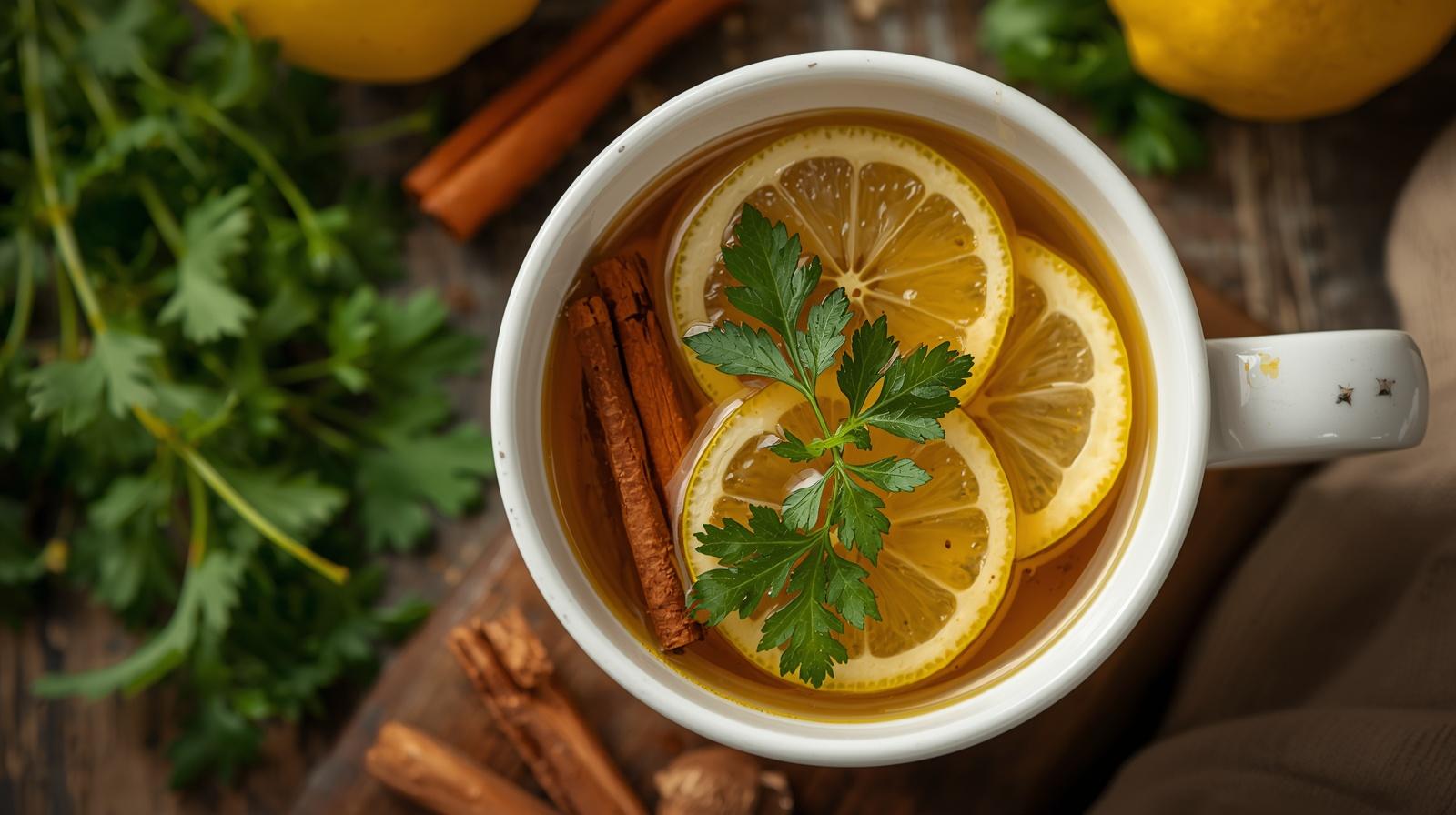
A simple daily infusion of three ingredients that together support bone density, blood sugar stability, liver detoxification, and the hormonal transitions of perimenopause.
5 minutes
10 minutes
Approximately 1.5 liters
2 to 3 days at room temperature, up to 5 days refrigerated
Bone health, blood sugar stability, liver support, fluid balance, iron support
What you need
- --1 bunch fresh parsley (approximately 30 to 40 grams)
- --1 large organic lemon, cut into slices
- --Half a stick of Ceylon cinnamon bark, roughly three-quarters of a finger length
- --Approximately 1.5 liters of filtered water
Everything goes into the pot together. Bring to a boil, let it simmer briefly, then turn off the gas and allow it to rest. Strain and drink throughout the day.
Important: Use Ceylon cinnamon bark, not cassia cinnamon.
Ceylon is the true cinnamon, with a thinner, more delicate bark, a lighter and sweeter flavor, and significantly less coumarin than cassia. Cassia is the common, hard, dark stick sold in most supermarkets. For daily use over weeks and months, Ceylon is the appropriate and safer choice.
Important: who should use caution
When this brew belongs in your day
- ◆As a daily morning or midday drink alongside or instead of plain water
- ◆When you want to add meaningful bone-supporting nutrition to your daily routine
- ◆On days when digestion feels sluggish or you are retaining fluid
- ◆When blood sugar fluctuations are creating energy dips or mood instability
- ◆As a liver-cleansing ritual during seasonal transitions
- ◆When you want the benefits of parsley without eating a salad every day
About this recipe
This is a functional brew dressed in simple clothing. A bunch of parsley, a sliced lemon, and a piece of cinnamon bark simmered in a pot of water. It takes five minutes to prepare and produces a brew that keeps for days. The flavor is clean, slightly herbal, lightly citrus, and gently warm from the cinnamon.
Parsley is one of the most nutrient-dense herbs available, and it is dramatically underestimated by everyone who has ever treated it as a plate garnish. It contains more Vitamin K per gram than almost any other food: just two tablespoons of parsley provide more than 150 percent of the daily Vitamin K requirement. For perimenopausal women, Vitamin K is not optional. It activates the proteins that bind calcium to bone, stimulates osteoblast activity, and slows bone resorption. It works in the same system as Vitamin D and calcium but through a different mechanism, and the three are most effective together.
Cinnamon bark adds the metabolic dimension. Blood sugar dysregulation worsens during perimenopause as estrogen's insulin-sensitizing role diminishes. Cinnamon acts through a mechanism similar to insulin, improving the body's sensitivity to glucose. Stabilizing blood sugar through daily food choices is one of the most actionable things a perimenopausal woman can do for her energy, mood, weight, and hot flash frequency, all of which worsen with blood sugar volatility. Lemon provides the Vitamin C that doubles iron absorption from the parsley and activates the digestive enzymes that ensure the other compounds are properly used.
This is a pot brew, not a kettle brew. You are simmering these ingredients gently together rather than steeping bags in pre-boiled water. The slow simmer extracts the fat-soluble compounds from the parsley, the full volatile oil profile from the cinnamon bark, and the limonene and hesperidin from the lemon peel. Let it come to a boil, then simmer, then rest. Strain, store, and drink throughout the day.
Why this recipe supports you
- ◆Parsley Vitamin K activates bone-building proteins and slows bone resorption, directly countering estrogen-driven bone loss
- ◆Cinnamon improves insulin sensitivity, stabilizing the blood sugar fluctuations that worsen perimenopause symptoms
- ◆Parsley apigenin and myristicin support estrogen metabolism and hormone balance
- ◆Parsley iron supports healthy hemoglobin, particularly relevant during heavy or irregular perimenopausal periods
- ◆Lemon Vitamin C enhances iron absorption from the parsley and supports collagen synthesis
- ◆Parsley supports kidney and liver detoxification through its diuretic and blood-purifying action
- ◆Cinnamon reduces systemic inflammation contributing to joint pain and mood disruption
- ◆Parsley chlorophyll supports liver function and blood purification
- ◆Cinnamon Rou Gui (TCM) warms Kidney Yang, addressing the cold extremities that accompany perimenopausal Yin deficiency
- ◆The combination is caffeine-free and appropriate at any time of day including evening
Ingredients and their wisdom
Fresh parsley, one bunch
Thermal quality: Cool. The Vitamin K, iron, and liver-purifying foundation of this brew.
Ayurveda
Quality: Light (Laghu), Cool (Shita), slightly Dry (Ruksha). Dosha effect: Reduces Pitta and Kapha; use with warming companions like cinnamon and lemon for Vata balance. Parsley is used in Ayurvedic and Unani medicine as a Mutrala (diuretic), Rakta Shodhaka (blood purifier), and Yakrit Uttejaka (liver stimulant). Its bitter rasa clears excess heat and toxins from the liver and blood, its pungent quality moves stagnant Pitta in the reproductive channels, and its cooling nature makes it appropriate for the Pitta aggravation that characterizes the heat phase of perimenopause.
TCM
Nature: Cool. Meridian: Liver, Kidney, Bladder. Action: Clears Heat, promotes urination, supports Liver function, purifies Blood. In TCM dietary therapy, parsley is used as a cooling, diuretic herb that clears Damp-Heat from the lower Jiao (the lower body cavity governing the bladder, kidneys, and reproductive organs). The Damp-Heat pattern in the lower Jiao produces symptoms that many perimenopausal women recognize: urinary urgency or frequency, lower abdominal heat and discomfort, fluid retention, and the hot, heavy feeling in the pelvis that accompanies hormonal fluctuation.
Nutrition
Parsley's Vitamin K content is its most therapeutically significant nutrient for perimenopausal bone health. Vitamin K activates osteocalcin, the protein that anchors calcium into the bone matrix, and activates matrix Gla protein, which prevents calcium from depositing in arterial walls instead of bones. This dual action, directing calcium toward bones and away from arteries, is highly relevant during perimenopause when both osteoporosis risk and cardiovascular risk increase simultaneously. Parsley also contains apigenin, a flavonoid studied for its role in modulating estrogen receptor activity, and myristicin, which has been shown to inhibit certain enzymes involved in estrogen metabolism. Its iron content is meaningful for women still experiencing heavy or irregular periods.
Lemon, sliced (1 large organic)
Thermal quality: Cooling to neutral. The Vitamin C amplifier, the Agni activator, and the flavor bridge.
Ayurveda
Quality: Light (Laghu), Sharp (Tikshna). Dosha effect: Kindles digestive fire; slightly increases Pitta in excess. Lemon (Nimbu) in this brew serves two functions. First, its sour rasa activates digestive enzymes and bile secretion, ensuring the compounds in the parsley and cinnamon are properly absorbed. Second, its Vitamin C directly enhances the absorption of non-heme iron from the parsley, which is the form of iron found in plant foods and is significantly less absorbable without an acidic companion.
TCM
Nature: Cool. Meridian: Stomach, Liver. Action: Generates fluids, harmonizes the Stomach, supports Liver function. In TCM, lemon's sour flavor enters the Liver channel and consolidates Liver Yin, the cooling and nourishing aspect of Liver function that becomes depleted during perimenopause. Alongside cinnamon's warming Yang-tonifying action, lemon creates the Yin-Yang balance that makes this brew appropriate for the mixed hot-and-cold pattern of perimenopausal transition.
Nutrition
The Vitamin C in lemon converts non-heme iron from parsley into a form that the intestinal cells can absorb. Studies have shown that consuming Vitamin C alongside iron-rich plant foods can increase iron absorption by two to three times. In a brew prepared specifically for its iron content alongside bone-building Vitamin K, the lemon is a functional co-factor, not just a flavor addition.
Ceylon cinnamon bark, roughly 3/4 finger length
Thermal quality: Warming. The blood sugar stabilizer and Kidney Yang tonic that brings warmth to a cooling formula.
Ayurveda
Quality: Light (Laghu), Dry (Ruksha), Warming (Ushna). Dosha effect: Strongly reduces Kapha; balances Vata; use with awareness in Pitta excess. Cinnamon (Tvak or Dalchini) is classified in Ayurveda as one of the most important digestive and circulatory spices, used to kindle Agni (digestive fire), improve absorption, warm cold and stagnant conditions, and enhance the bioavailability of other herbs in any formula it accompanies. Its presence in this brew ensures that the cooling qualities of parsley and lemon do not become excessive, particularly for Vata-dominant women who already run cold.
TCM
Nature: Hot. Meridian: Kidney, Spleen, Liver, Heart. Action (Rou Gui, cinnamon bark): Warms the Kidneys and tonifies Yang, dispels cold, unblocks channels, warms the middle Jiao. In TCM, cinnamon bark is one of the primary herbs for Kidney Yang deficiency, the pattern that underlies the cold extremities, low back ache, reduced libido, and fatigue that accompany perimenopausal Yin depletion. Rou Gui addresses the Yang deficiency aspect while parsley and lemon address the Yin deficiency heat, making this formula appropriate for the full mixed presentation of perimenopause.
Nutrition
Cinnamaldehyde, the primary bioactive compound in cinnamon bark, acts on glucose metabolism through a mechanism similar to insulin, improving cellular sensitivity to insulin and reducing fasting blood sugar levels. For perimenopausal women, this is directly relevant: estrogen plays an important role in maintaining insulin sensitivity, and as estrogen declines, blood sugar regulation worsens. The resulting insulin resistance contributes to weight gain around the abdomen, increased cardiovascular risk, mood instability, and worsened hot flash frequency. Note on coumarin: Ceylon cinnamon contains trace amounts of coumarin, making it significantly safer for daily use than cassia cinnamon, which contains high coumarin levels that can affect liver function over time.
Why these three work together
This brew is built around a simple but effective principle: a cooling, purifying, bone-building herb (parsley) paired with its Vitamin C co-factor (lemon) and balanced by a warming, blood-sugar-stabilizing bark (cinnamon). Each element does something the others do not, and each supports the absorption and action of the others.
Parsley provides the Vitamin K, iron, and apigenin. Lemon provides the Vitamin C that doubles the iron's bioavailability and activates digestive enzymes to ensure the Vitamin K and polyphenols are absorbed. Cinnamon provides the warmth that prevents the cooling formula from extinguishing digestive fire and adds the blood sugar and circulatory support that parsley does not address. The three together cover bone health, iron status, blood sugar regulation, liver detoxification, and hormonal support with three common, inexpensive, widely available ingredients.
How to make it
Combine in a pot
Place the parsley bunch, lemon slices, and cinnamon bark into a pot, not a kettle. You need the slow, even heat of a stovetop pot to properly extract from the cinnamon bark and the parsley stems, which hold more mineral content than the leaves alone. Add approximately 1.5 liters of filtered water.
Bring to a boil, then simmer
Bring the pot to a boil over medium heat. Once boiling, reduce to a simmer and hold for 5 to 7 minutes. You will notice the water turning a pale green-gold color as the parsley, lemon, and cinnamon release their compounds. The aroma will be herbal, lightly citrus, and warm.
Turn off the heat and rest
Turn off the gas and let the pot sit for another 5 to 10 minutes. This resting period allows the extraction to continue gently at lower temperature, preserving more of the heat-sensitive Vitamin C from the lemon and the volatile oils from the parsley. Do not continue boiling longer than the simmer period.
Strain and store
Strain out all solids: parsley, lemon slices, and cinnamon bark. Pour the strained brew into a glass jar or thermos. Drink warm, at room temperature, or slightly cool depending on the season and your constitution. It keeps at room temperature for 2 to 3 days and refrigerated for up to 5 days.
When and how to drink it
This brew is caffeine-free and appropriate at any time of day, including the evening. Unlike the green tea formula from this recipe collection, there is no timing restriction.
Drink it the way you drink water throughout the day: a cup with breakfast, a cup midmorning, a cup in the afternoon. There is no specific ritual required. The goal is daily consistency over weeks and months rather than a concentrated single serving. Vitamin K's bone-building effects and cinnamon's blood sugar benefits are cumulative, meaning the daily dose matters more than any individual cup.
For Pitta-dominant women who run hot: drink it at room temperature or slightly cool. The parsley and lemon are already cooling, and the cinnamon is present in a moderate amount that will not overheat. For Vata-dominant women who run cold: drink it warm and perhaps add a thin slice of fresh ginger to the pot during simmering.
Common questions
How is this different from the green tea and hibiscus brews in this collection?
The green tea brew is the cognitive and bone-density formula, with caffeine and EGCG best suited for mornings. The hibiscus and hawthorn brew is the cardiovascular tonic, best drunk throughout the day. This parsley brew is the bone-and-blood-sugar formula, with no caffeine and a strong Vitamin K profile. The three brews serve different systems and can be rotated across the week rather than consumed simultaneously.
Can I add honey?
Yes. A small amount of raw honey added to the cup after pouring, not to the pot during cooking, adds pleasant sweetness and trace enzymes. Avoid adding honey to the pot because sustained heat degrades its active compounds.
Does cooking the parsley destroy the Vitamin K?
Vitamin K is fat-soluble and significantly more heat-stable than Vitamin C. Simmering parsley preserves the majority of its Vitamin K content. What is reduced by heat is some of the Vitamin C, which is why the lemon goes in with the simmering rather than being added after: even reduced, it is still sufficient to support iron absorption, and the peel compounds extract better with heat.
Can I use dried parsley?
Fresh parsley is significantly more potent for this preparation. Dried parsley loses much of its volatile oil content and reduces the chlorophyll and fresh apigenin concentration. If fresh parsley is unavailable, use three tablespoons of dried parsley, but the fresh version is worth seeking out. It is widely available, inexpensive, and keeps well in the refrigerator wrapped in a damp cloth for up to a week.
Why a pot and not a kettle?
Cinnamon bark needs sustained contact with simmering water to release its cinnamaldehyde and polyphenols. A kettle brings water to a single boil and pours, which is insufficient for bark extraction. The stovetop pot allows the controlled simmer that extracts from all three ingredients properly, particularly the cinnamon and the parsley stems.
Sources and references
Farzaei MH et al. Parsley: a review of ethnopharmacology, phytochemistry and biological activities. Journal of Traditional Chinese Medicine. 2013.
Tsuji-Naito K. Aldehydic components of cinnamon bark extract suppress RANKL-induced osteoclastogenesis through NFATc1 downregulation. Bioorganic and Medicinal Chemistry. 2008.
Khan A et al. Cinnamon improves glucose and lipids of people with type 2 diabetes. Diabetes Care. 2003.
Booth SL. Vitamin K: food composition and dietary intakes. Food and Nutrition Research. 2012.
Hallberg L, Hulthen L. Prediction of dietary iron absorption. American Journal of Clinical Nutrition. 2000. (Vitamin C and non-heme iron absorption.)
Frawley D, Lad V. The Yoga of Herbs: An Ayurvedic Guide to Herbal Medicine. Lotus Press. 1986.
Maciocia G. The Practice of Chinese Medicine. Churchill Livingstone. 2008.
Bloom in the pause.