# Ayurvedic Treatments for Perimenopause: What the Research Shows
*Second Spring Health | secondspringhealth.ai*
---
Ayurveda has been treating the menopausal transition for over three thousand years.
Not as a deficiency to be corrected. Not as a problem to be managed. As a passage into a new stage of life, one that requires the whole system to be seen, not just the most visible symptom.
Modern research is beginning to catch up with what Ayurvedic physicians have long understood. The herbs, the therapies, and the daily practices now have clinical trials behind them. They also have something clinical trials cannot fully measure: a framework that treats the woman, not the diagnosis.
This post covers the full spectrum of Ayurvedic treatments for perimenopause. What they are, what the evidence shows, and how they work alongside each other.
---
## How Ayurveda Sees Perimenopause
Ayurveda divides life into three stages corresponding to the three doshas.
Kapha governs childhood and early adulthood. Pitta governs the productive middle years. Vata governs the later stage of life, from roughly the mid-forties onward.
Perimenopause marks the transition from Pitta to Vata.
The Pitta fire of the reproductive years begins to wind down. Vata, the energy of movement, dryness, and space, begins to rise. When both are active simultaneously, the contradictions appear. Hot and cold. Wired and exhausted. Sharp and foggy. This is not dysfunction. This is the passage.
Every Ayurvedic treatment for perimenopause is oriented around the same goal: supporting this constitutional shift by reducing excess Vata, clearing residual Pitta, and rebuilding Ojas. Ojas is the Ayurvedic concept of deep vitality, the refined essence of the reproductive years being redirected inward.
The specific herbs and therapies that apply to you depend on your dosha pattern and current imbalance. Vata presentations look different from Pitta presentations. The treatments differ accordingly. This is why Ayurveda always begins with assessment, not prescription.
---

## Herbal Medicine
### Shatavari
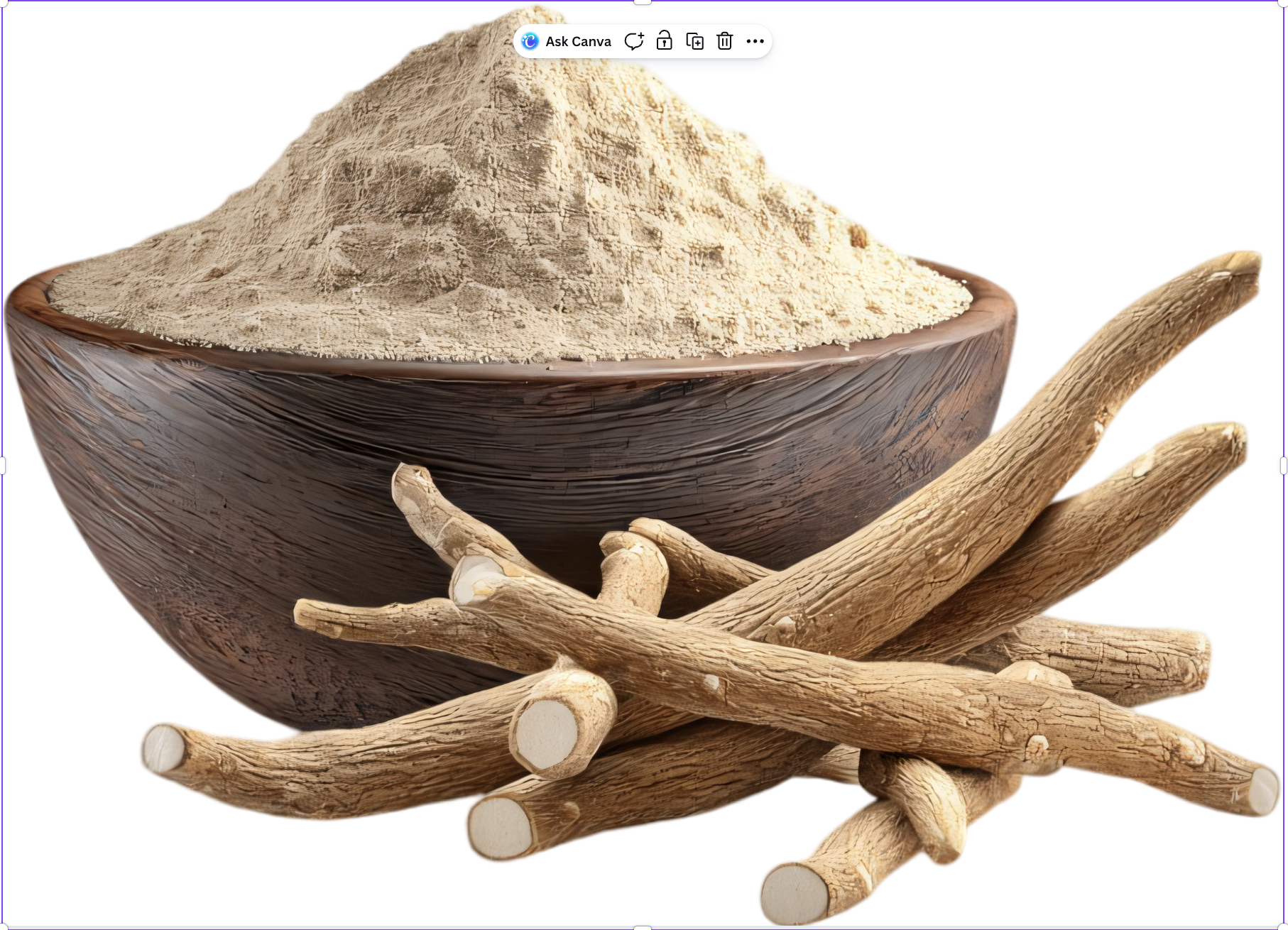
Shatavari, Asparagus racemosus, is known in Ayurveda as the queen of herbs for women.
Its name means "she who has a hundred husbands," a reference to its traditional role in supporting female vitality across the full lifespan. It is the single most important herb in Ayurvedic women's medicine.
The research has followed. A randomized controlled trial published in peer-reviewed literature found that daily supplementation with 250 mg of Shatavari extract significantly reduced a range of menopausal symptoms, with no adverse effects reported. Participants experienced improvement in hot flashes, vaginal dryness, mood instability, and sleep. Shatavari has phytoestrogenic properties, meaning it contains plant compounds with weak estrogen-like effects that help modulate the hormonal fluctuation of perimenopause without the risk profile of synthetic estrogen.
It also directly nourishes the Yin tissues. In Ayurvedic terms, Shatavari is a Rasayana: a rejuvenating substance that rebuilds the deep tissues depleted during the transition.
For women showing Vata dryness patterns, hot flashes, vaginal dryness, skin changes, and sleep disruption, Shatavari is typically the foundational herb.
### Ashwagandha
Ashwagandha, Withania somnifera, is the primary adaptogen in Ayurvedic medicine.
Where Shatavari nourishes the Yin, Ashwagandha supports the nervous system and adrenal response. In perimenopause, this matters enormously. The adrenal glands become the secondary production site for estrogen as ovarian production declines. Chronic stress taxes the adrenals and accelerates the depletion of hormonal reserves.
An eight-week randomized controlled trial found statistically significant improvements in vasomotor symptoms and psychological wellbeing in the Ashwagandha group compared to placebo. Separate research has demonstrated its role in reducing inflammation, oxidative stress, and vascular dysfunction, three processes that worsen significantly during the perimenopause transition.
In Ayurveda, Ashwagandha is classified as a Vata-grounding herb. It calms the nervous system, strengthens the immune response, and supports the deep rest that becomes harder to access as hormones shift.
Used together, Shatavari and Ashwagandha address the two central challenges of the perimenopause transition: the depletion of Yin tissue and the dysregulation of the nervous system.
### Supporting Herbs
Brahmi, Bacopa monnieri, is the primary Ayurvedic herb for cognitive function. Brain fog, word-finding difficulty, and the sense of losing mental sharpness are among the most distressing and least discussed perimenopause symptoms. Brahmi supports cerebral blood flow, reduces anxiety, and protects neurological function during the hormonal shift.
Yashtimadhu, licorice root, has demonstrated hormone-modulating effects in clinical research. It is used in perimenopause formulas to support the HPA axis, reduce cortisol reactivity, and provide mild phytoestrogenic support. It is not appropriate for women with high blood pressure. Practitioner guidance is required.
Guggulu, Commiphora mukul, supports the metabolic and joint changes of the Vata transition. As estrogen declines, insulin sensitivity shifts and inflammatory pathways activate. Guggulu addresses both.
All Ayurvedic herbal treatment should be overseen by a qualified Ayurvedic practitioner. Dosage, formula composition, and herb selection depend entirely on your constitution and current pattern.
---
## Panchakarma Therapies
Panchakarma is the Ayurvedic system of deep purification and rejuvenation. The word means "five actions." It encompasses a set of therapies designed to clear accumulated toxins, or Ama, from the deep tissues, reset the nervous system, and rebuild Ojas.
A full Panchakarma program is typically five to fourteen days, conducted under the supervision of an Ayurvedic physician. It includes preparatory practices, the primary therapies themselves, and a post-treatment rejuvenation phase. It is not a spa experience. It is a clinical intervention requiring preparation, practitioner guidance, and post-treatment protocol.
The therapies most relevant to perimenopause are described below.
### Abhyanga
Abhyanga is the daily warm oil self-massage.
It is described in Ayurvedic classical texts as one of the most important daily practices a person can adopt. In modern terms, the research supports this. Self-massage stimulates the lymphatic system, improves circulation, activates the parasympathetic nervous system, and nourishes the skin and soft tissues.
For perimenopause, Abhyanga is particularly significant because it directly counteracts the central Vata symptom: dryness. Vata dryness shows up as dry skin, dry eyes, vaginal dryness, brittle nails, stiff joints, and a dry quality in the nervous system that manifests as anxiety and restlessness. Warm medicated oil applied daily begins to reverse this pattern at the tissue level.
The oils used depend on your dominant dosha.
Ksheerabala oil is prepared with milk and Bala root in a sesame oil base. It is deeply nourishing for Vata and is the traditional recommendation for joint pain, neurological symptoms, and generalized depletion. Ashwagandha oil is prepared with Ashwagandha in a sesame base and is used for nervous system support and hormonal balance.
Sesame oil as a base is warming and grounding, appropriate for Vata and Kapha. Coconut oil is cooling and appropriate for Pitta presentations, particularly in women with excess heat, inflammatory symptoms, or hot flash predominance.
The practice takes ten minutes. The benefits compound with daily use.
### Shirodhara
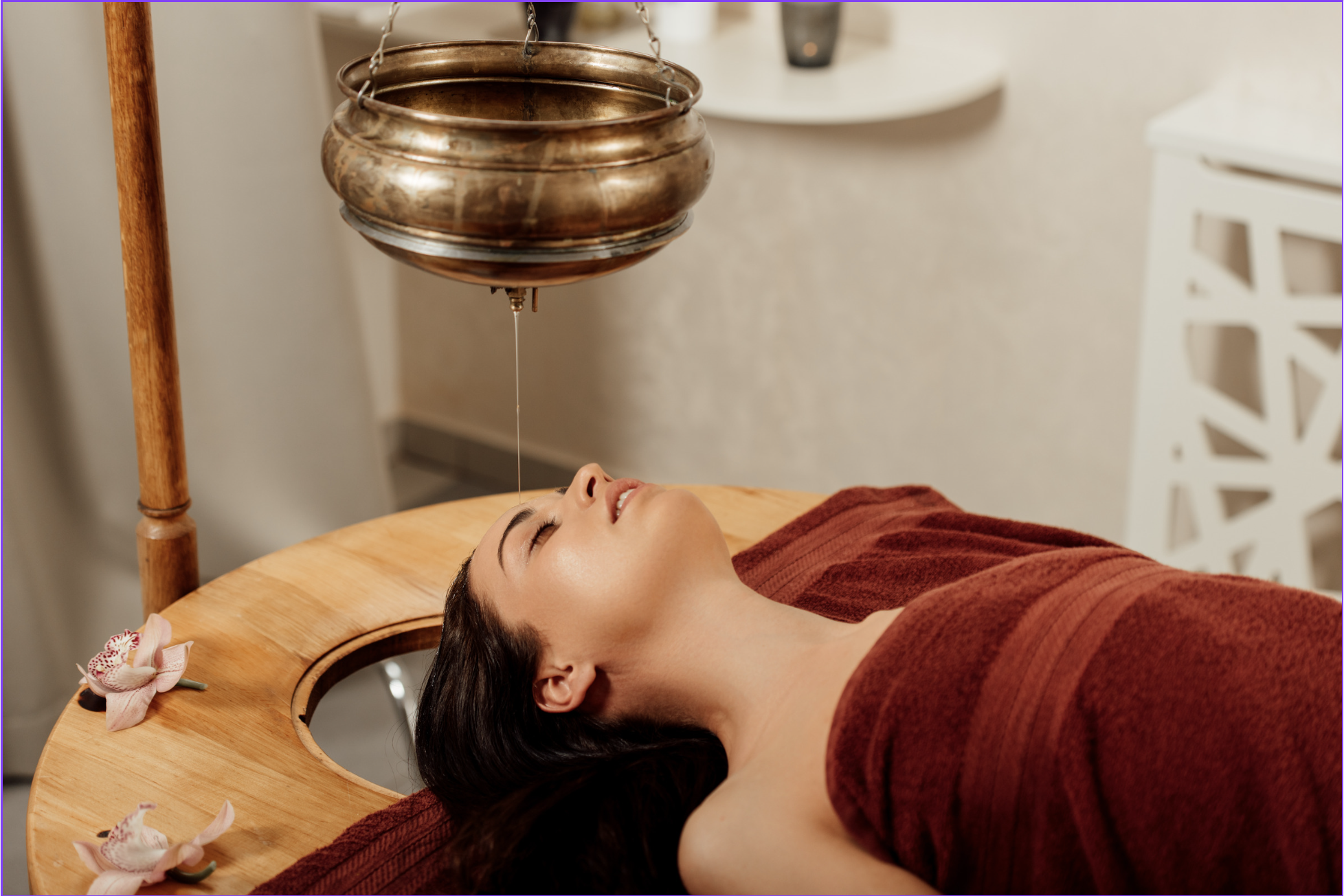
Shirodhara is the continuous pouring of warm medicated oil over the forehead, across the third eye point, in a slow and rhythmic stream.
It is among the most distinctive and specific Ayurvedic therapies. It is also, for many women in perimenopause, among the most profoundly effective.
A randomized study comparing Shirodhara to other interventions found that patients undergoing Shirodhara had significantly better relief of the psychological symptoms of menopause. The researchers concluded it can be used as an alternative therapy to hormone treatment for emotional and psychological symptoms.
The mechanism is understood in both Ayurvedic and physiological terms. The warm oil applied to the forehead and the point known in Ayurveda as Ajna, the seat of consciousness, induces vasodilation in the cortical brain regions. It regulates the hypothalamus, the structure that governs both temperature regulation and hormonal output. It directly calms the autonomic nervous system, shifting from sympathetic dominance to parasympathetic restoration.
The result is what practitioners describe as a profound settling. The nervous system calms in ways that hours of meditation sometimes cannot achieve in a single session.
Shirodhara is particularly effective for the anxiety, insomnia, emotional volatility, and the hot flashes with strong nervous system involvement that are characteristic of Vata-Pitta perimenopause presentations. Sessions typically run between thirty-five and fifty-five minutes and are conducted by an Ayurvedic practitioner.
---

## Dinacharya: The Daily Routine
Dinacharya means daily regimen. It is, in Ayurvedic understanding, the foundational medicine.
The principle is that the body is governed by natural cycles: the cycle of the sun, the cycle of digestion, the cycle of sleep and waking. When daily life is organized to align with these rhythms, the doshas remain in balance. When life is fragmented, irregular, and driven by stimulation rather than rhythm, the doshas destabilize. Vata is the first to become aggravated by irregularity.
Perimenopause makes every woman more sensitive to this. The hormonal transition reduces the body's buffer against disruption. What the body could previously absorb, it now responds to more acutely.
Dinacharya is not a single practice. It is an architecture for the day.
Rising before or at sunrise aligns cortisol rhythms with the natural light cycle. Tongue scraping upon waking removes Ama accumulated overnight and activates the digestive reflex. Oil pulling with sesame or coconut oil for five to ten minutes clears oral bacteria and supports the lymphatic drainage of the head and neck. A glass of warm water before food stimulates Agni, the digestive fire, and prepares the gut for the first meal.
Meals at consistent times are as important as what is eaten. Agni, like all biological processes, operates in cycles. Irregular eating times disrupt the digestive fire and produce Ama, the undigested material that Ayurveda considers the root of most chronic conditions.
An early evening wind-down, away from screens, with calming activities and a consistent sleep time, supports the transition into the Kapha evening hours and prepares the nervous system for deep, restorative sleep.
No single practice here is dramatic. The medicine is the consistency. Practiced over weeks and months, Dinacharya reduces the cortisol burden, stabilizes digestion, and builds the regularity that Vata in its aggravated state most craves.
---

## Working With an Ayurvedic Practitioner
Every treatment described in this post is individualized.
The herbs, the oils, the therapies, and the practices that are appropriate for you depend on your Prakriti, your foundational constitution, and your Vikriti, your current pattern of imbalance. Two women with hot flashes may have completely different dosha profiles. Their treatments will differ accordingly.
A qualified Ayurvedic practitioner begins with a full assessment that includes pulse diagnosis, physical observation, and a detailed intake of symptoms, history, and daily patterns. From this, a treatment protocol is developed that addresses not just the presenting symptoms but the underlying constitutional pattern.
The integration of Ayurvedic treatment with modern medicine is also a conversation worth having with both practitioners. Many women in perimenopause benefit from Shatavari and Ashwagandha alongside conventional hormone therapy. Many find that Shirodhara and Abhyanga reduce the anxiety and sleep disruption that medication alone does not fully address.
Ayurveda does not ask you to choose. It asks you to see the whole picture.
---
*This post is for educational and informational purposes only. It is not a substitute for personalized medical or Ayurvedic advice. If you are experiencing significant perimenopause symptoms, consult both a menopause-informed clinician and a qualified Ayurvedic practitioner.*
*Second Spring Health | secondspringhealth.ai*